Beneath the headlines of protests and communication blackouts, a little-known mobile app is quietly writing the future of decentralized communication. Bitchat, described by Twitter co-founder Jack Dorsey as a “weekend project,” is an offline peer to peer messaging app, gaining attention as a tool designed to work when traditional networks fail.
The app has been promoted as an alternative means of communication for people in countries such as Uganda and Iran, where authorities have restricted or blocked internet access amid elections and protests. Bitchat, while also presented as an alternative networking solution for natural disasters and regions with limited connectivity, has gained particular traction in these contexts, perhaps, reflecting its developers’ anticipation of where it will be needed the most.
Bitchat works by sending a message from one smartphone to another, which then hops consecutively from device to device until it reaches its intended destination, the phones functioning as both senders and relays. This is called a mesh network system, which uses short-range Bluetooth connections instead of relying on a central server.
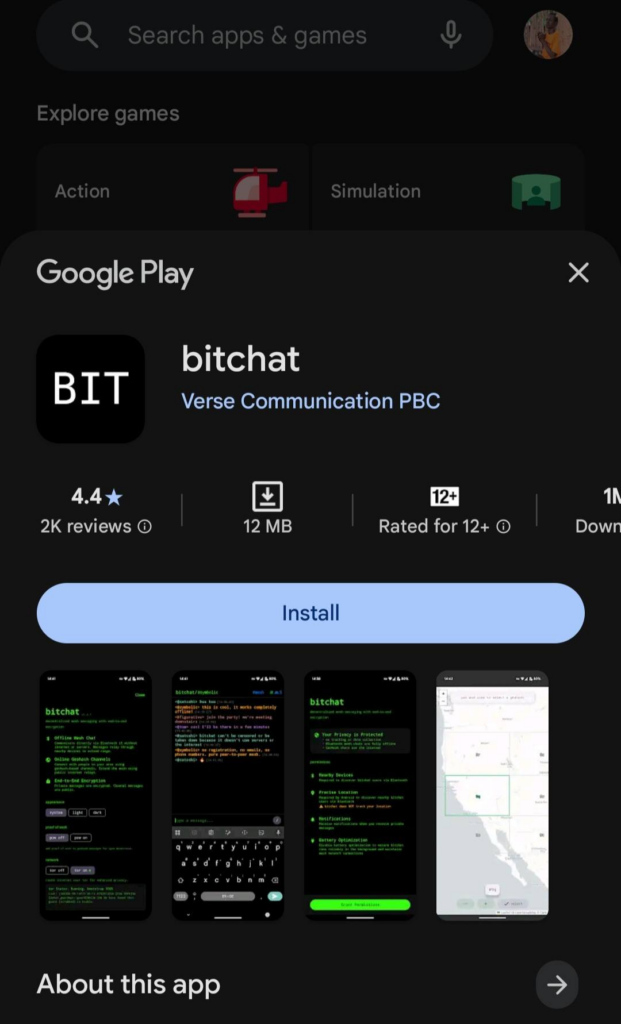
Other users on a local network can see the messages you send, but visibility can be customized to a single user or a selected group within the network. Bitchat requires no login with phone number or email id and does not track the location of a user. To run reliably in the background, it requires disabling battery optimization.
Privacy and safety are central to the design. The app generates a temporary encryption key that changes regularly, a feature intended to make tracking and surveillance almost impossible. This approach makes Bitchat particularly suited for deliberate communications blackout scenarios.
The app gained notable public attention after Ugandan pop star and opposition leader Bobi Wine called on citizens via X to download Bitchat ahead of a potential election-day internet shutdown. Following the endorsement, reports indicated a sharp increase in downloads on App Store and Play Store amid rising political tensions.
Although similar tools such as Bridgefy also use Bluetooth-based messaging, Bitchat distinguishes itself through its fully decentralized, server-free architecture, positioning it as a more resilient option when access to the internet is cut..
The app however is largely not secured, as developer Jack Dorsey has openly acknowledged that the platform does not yet meet all security standards and contain vulnerabilities. It remains an open source, leaving it open for external developers to introduce new features and improvements. This transparency frames the app not as a finished product but as a collaborative project.
Possible tool for future digital payments
Bitchat is also envisioned as a future e-payment system, potentially redefining digital finance entirely. Bluetooth was not designed for payments, but when combined with Bitchat, it can create an offline digital bearer instrument, as highlighted in Forbe’s July 31, 2025, publication. The article cites a recent demonstration of “two phones beaming satoshis back and forth over a Bitchat mesh.” Transactions conducted through the app can later have their eCash tokens settled when converted to on-chain Bitcoin.
Although the trend strongly suggests that the app was designed for political contexts, and that it seems to be on an infancy stage, the app hints at a future of high decentralization.