A drone strike on a market in the disputed Abyei region killed at least 153 people, South Sudanese officials said, blaming Sudan’s military for the attack. The death toll is expected to rise as recovery efforts continue at the scene.
The attack on Monday was part of a series of deadly drone strikes in recent days that have killed more than 250 people, highlighting the growing toll of aerial attacks in Sudan’s war. The conflict erupted in April 2023 between the Sudanese Armed Forces (SAF) and the paramilitary Rapid Support Forces (RSF), triggering a major humanitarian crisis and drawing in local militias and foreign powers.
Yohana Akol Ngor, Abyei’s caretaker information minister, told Reuters on Tuesday that the death toll from the market strike had risen to 153 from an earlier estimate of 73. He warned that the number of victims could increase further as recovery operations continued.
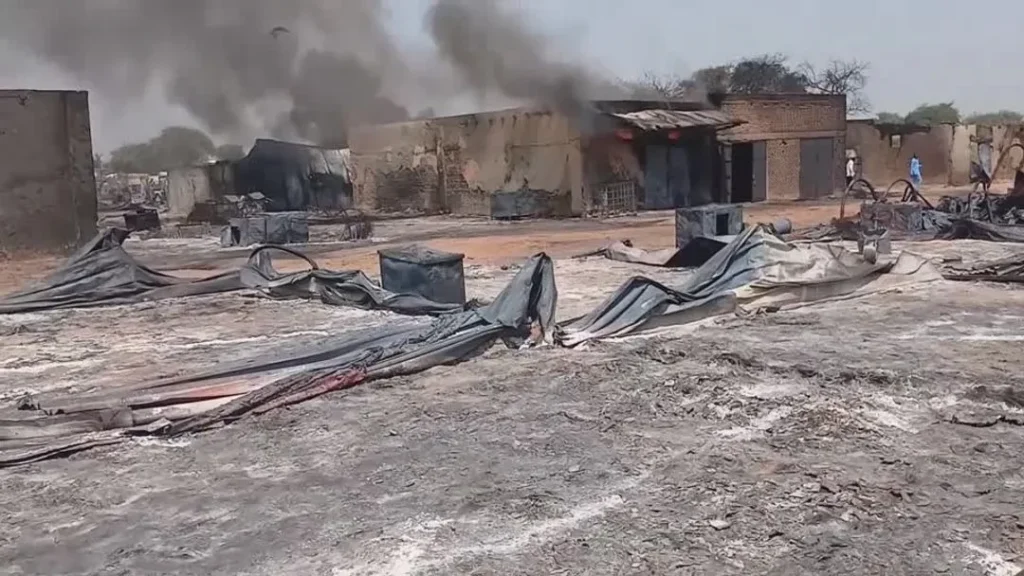
“The fire is still burning. So the recovery process of the dead ones is still continuing. The situation is terrible,” Ngor said, adding that some bodies had been burned to ashes.
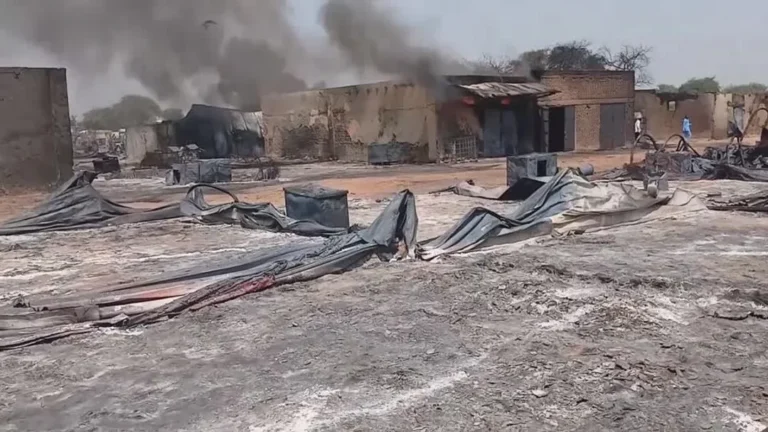
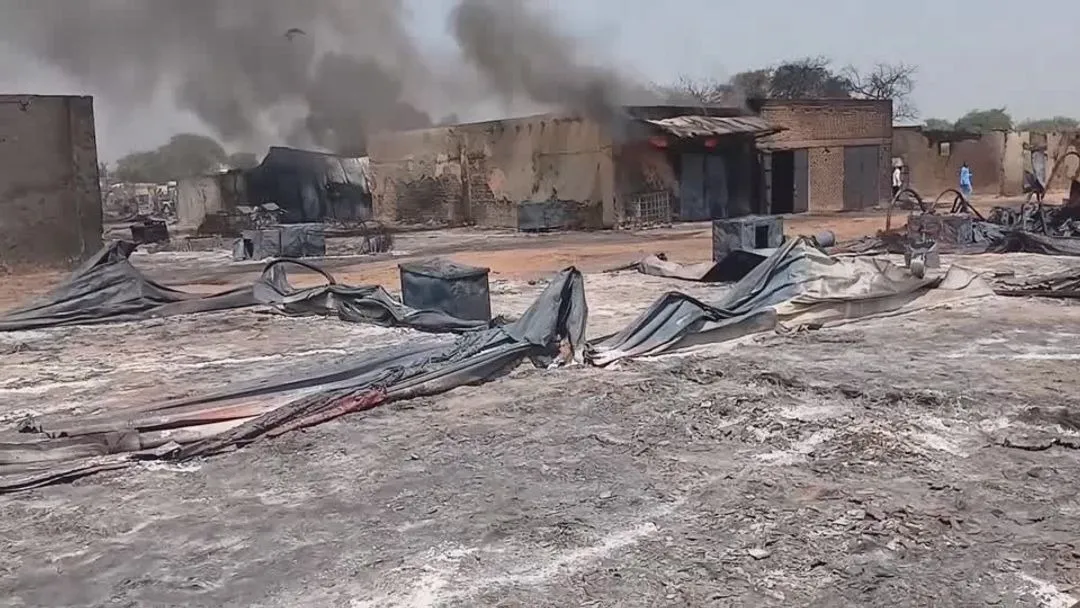
A video filmed at the scene on Tuesday and verified by Reuters showed charred and twisted remains of vehicles and buildings. Flames continued to billow from one building as residents inspected the damage.
Ngor blamed Sudan’s military for the attack but did not provide evidence. A spokesperson for Sudan’s armed forces did not immediately respond to a request for comment.
Three diplomatic sources, an aid worker and a conflict expert told Reuters that the strike hit a fuel depot in the market. The diplomatic sources said the depot had previously been used by the RSF to supply its forces. A spokesperson for the paramilitary group did not immediately respond to requests for comment.
DISPUTED OIL-RICH ABYEI
South Sudan declared independence from Sudan in 2011. Since then, both countries have claimed oil-rich Abyei, a disputed territory that is jointly administered. The region borders Sudan’s Kordofan region, which has become a major centre of fighting in the war.
Officials in Sudan’s military-led government told Reuters that the RSF operates in parts of Abyei. Ngor denied that the paramilitary group was present in the region. Reuters could not immediately verify either claim.
The United Nations Interim Security Force for Abyei (UNISFA) warned in May that the RSF’s presence in the region had increased insecurity. It also said delays in determining Abyei’s final status had put civilians and UN personnel at risk.
UN spokesperson Stephane Dujarric said the United Nations strongly condemned the series of drone attacks in Abyei and other areas.
DEADLY WEEK
Sudan’s armed forces and the RSF have recently intensified drone attacks, with strikes targeting RSF-held Nyala and the army-controlled Khartoum airport this week.
On Sunday, drone attacks in West Kordofan state, which is controlled by the RSF, killed about 84 people and injured 65 others, according to the local Emergency Response Room.
On Monday, four children were killed in repeated drone attacks targeting Khartoum airport, which is controlled by Sudan’s army.
On Friday, an attack on a market in Nyala, an RSF stronghold, killed 23 people and injured 44, according to local volunteers.
Chadian authorities have accused Sudan’s military of carrying out drone strikes on Chadian territory, which UN experts say is regularly used for RSF supply routes. Sudan’s foreign ministry said in late August that its armed forces were acting to protect the country’s security.
On October 10, an airstrike near Sudan’s border with Egypt killed more than 70 artisanal miners, according to a local rights group.