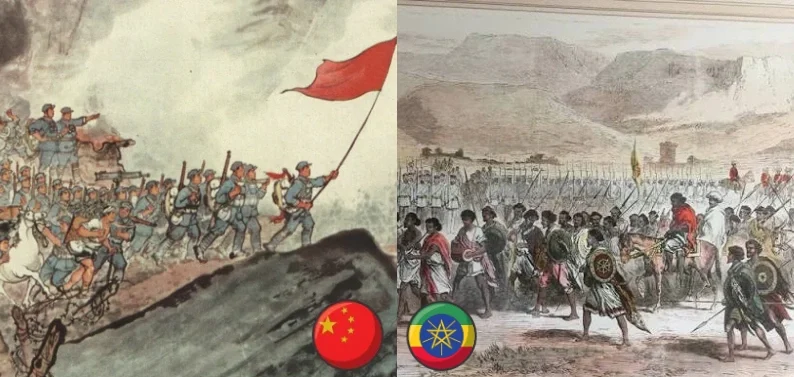
As China marks 90 years since the end of the Long March, Ethiopian readers may hear an echo of their own history
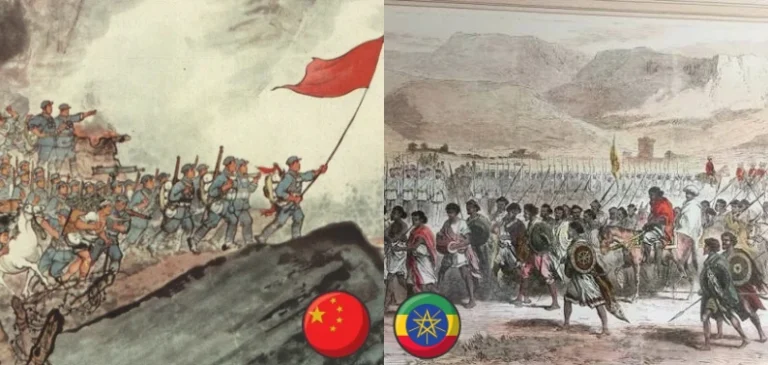
In October 1936, on a windswept plateau in northwest China, three exhausted columns of soldiers finally linked up. They had walked, fought and starved across more than 12,000 kilometres of mountains, rivers and grassland. When their flags joined — at Huining, in Gansu province, and at nearby Jiangtaibao — the Long March had reached its end.
That same autumn, on another continent, another people were also on a long march of their own. Ethiopia was barely five months into Italian occupation, and its patriots were heading into the mountains to begin five years of resistance. The two stories were never connected at the time. But they rhyme: two nations, at the same moment in history, refusing to lie down.
This month, China marks the 90th anniversary of the Long March’s end. From Addis Ababa, the echo is not hard to hear.
A journey measured in loss
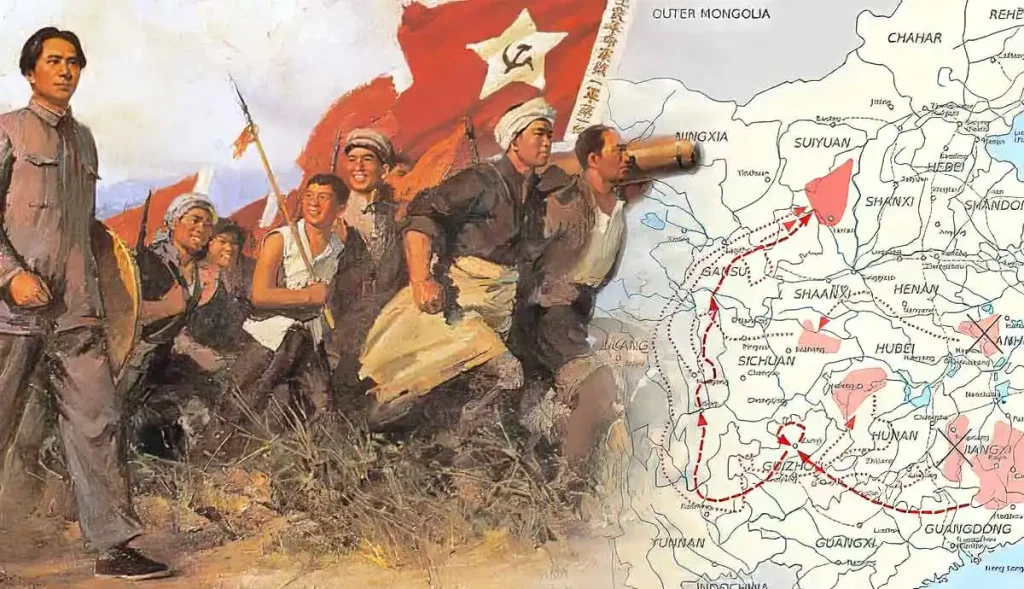
The march began as a retreat. In October 1934, the Red Army, the military force of the Chinese Communist Party, was besieged by Nationalist forces in its base in the south-eastern province of Jiangxi. It broke out of encirclement and turned north. More than 86,000 men and women set out in the main column. Many were teenagers from farming villages who had never seen a city.
The cost was brutal. A single battle on the Xiang River cut the column from 86,000 to barely 30,000. Then came the snow mountains of Sichuan, peaks above 4,000 metres where soldiers roped themselves together to cross the trails, and the grasslands, where men vanished into bogs that had looked like solid ground. They ate leather, bark and roots. In January 1935, at a meeting in the town of Zunyi, in Guizhou province, the army’s leaders changed course, and the march found its direction.
In October 1935, the survivors reached the loess villages of northern Shaanxi: about 7,000 of them, one in twelve of those who had left Jiangxi. A year later, the three main columns reunited. Along the way they had crossed 14 provinces and more than 20 major rivers, climbed some of China’s highest mountains and fought more than 600 engagements. Chairman Mao Zedong later called the Long March “a manifesto, a propaganda brigade and a seeding machine.”
An echo Ethiopian readers will recognise
Within months of the march’s end, the armies that survived it would be fighting a new war — against Japan’s invasion, the Asian front of the same fascist aggression Ethiopia was resisting in Africa.
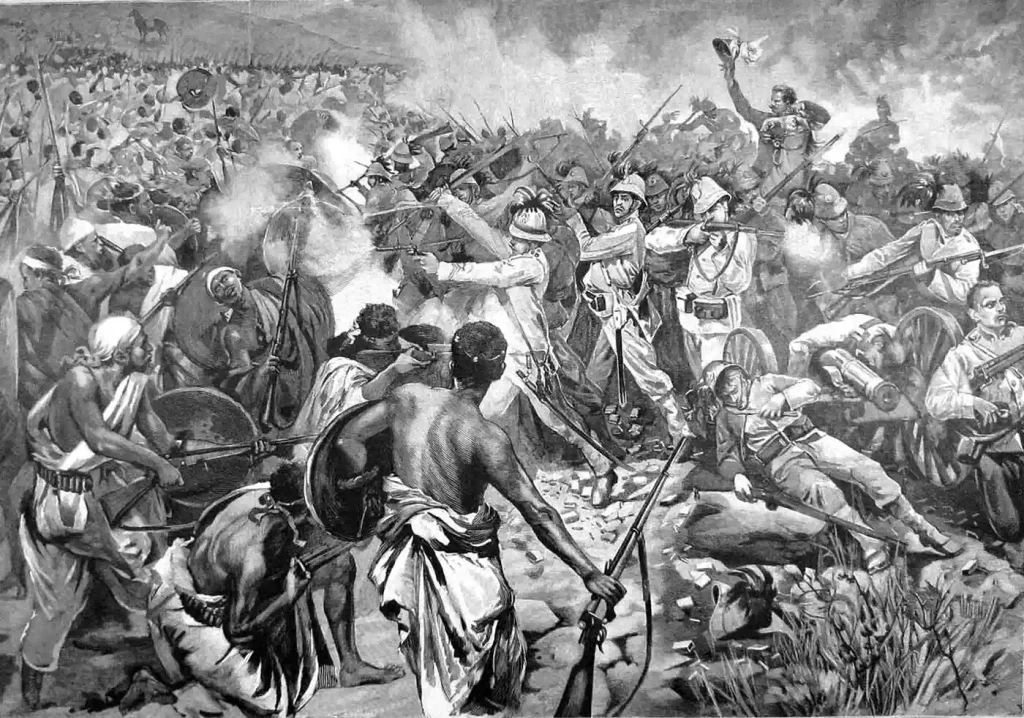
Ethiopia needs no lessons in that belief. In 1896, at Adwa, Ethiopian forces defeated an invading Italian army and kept their independence. The victory made the country a beacon of African freedom. In 1935, Mussolini’s troops returned, with tanks, aircraft and chemical weapons. The League of Nations condemned the invasion but did not stop it. Addis Ababa fell in May 1936. Then, for five years, the patriots — farmers, students, former soldiers — fought from the highlands, until liberation in 1941.
That is what the Long March can say to an Ethiopian reader: your grandparents’ generation understood this. Ordinary people, outgunned, chose the hardest road and walked it for years — not because it was easy, but because it was right.
The new long march
Ninety years on, both countries are still walking.
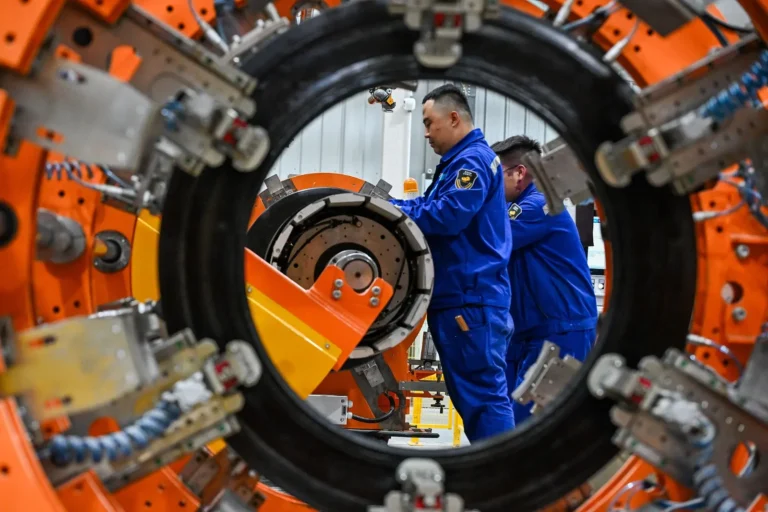
China’s march after 1949 was no less arduous: from a war-torn country where hundreds of millions lived in poverty to the world’s second-largest economy. Since reforms began in 1978, some 800 million people have risen out of extreme poverty. It is the largest and fastest poverty reduction in human history. Chinese leaders today describe their goal of national renewal as a “new long march”: no shortcuts, just step after step.
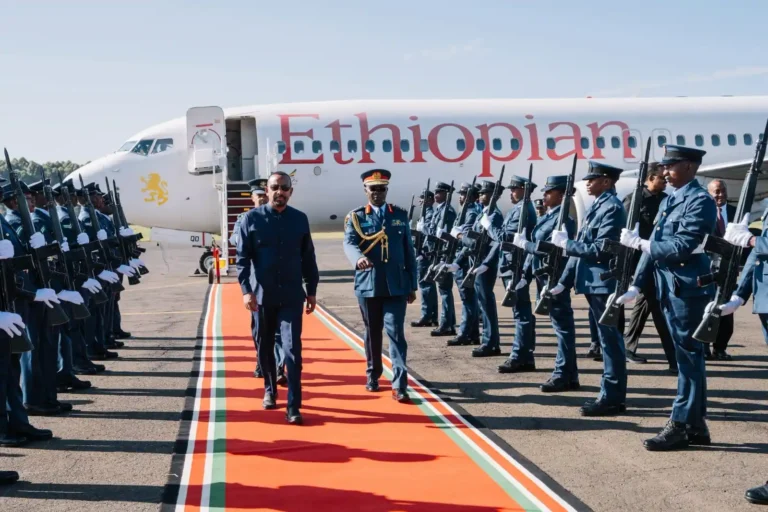
Ethiopia’s long march continues too, from Adwa to nation-building to the Grand Ethiopian Renaissance Dam, Africa’s largest hydroelectric project, formally inaugurated last year after more than a decade of construction. And increasingly, the two journeys run in parallel.
China built the African Union’s conference centre in Addis Ababa, handed over as a gift in 2012. It is the house where African leaders meet, on African soil.
Chinese companies laid the Addis Ababa–Djibouti railway, sub-Saharan Africa’s first electrified railway, linking the continent’s diplomatic capital to the sea. Addis Ababa’s light rail, the first of its kind in sub-Saharan Africa, began carrying passengers in 2015. Thousands of Ethiopian students study in China. Ethiopia joined BRICS in 2024. At that year’s Beijing summit of the Forum on China-Africa Cooperation, the two sides raised their relations to an all-weather community with a shared future.
None of this happened by magic. A dam takes more than a decade. A railway takes years. The modern long march is built the way the old one was walked: slowly, in stages, by people who keep going when the work stops being exciting.
Why it still matters
The Long March is not only the story of one party or one country. It is a story about how far people can go when the cause they serve is bigger than any one of them.
Some of the Red Army soldiers were fourteen or fifteen years old. They did not know, setting out, whether they would see the end of the road. Many did not. They walked anyway. In the Ethiopian highlands in the late 1930s, patriots their own age faced the same darkness, and they too walked on.
Every generation has its long march. For the soldiers it ended at Huining in October 1936, when three exhausted columns became one. For the patriots it ended in 1941. Ours has no end date. It is being walked in stages — a decade for a dam, years for a railway, one student at a time.
Two long marches, one spirit: the belief that a better tomorrow is worth the hardest walk.
Written by Wu Ting, Correspondent of CMG Addis Ababa Bureau