The clichéd label – “the starving artist” is a romanticization most often used by those close to art and artists. It evokes the image of an artist driven purely by love for the craft—someone who follows passion without the “necessary” financial backing that would allow them to pursue their work free from the constant threat of financial insecurity, or worse, hunger.
A story that recently unfolded on the transforming streets of Addis Ababa baffled many and angered others. An author known for his political novels—yet largely distant from public view—suddenly found himself at the center of public attention.
Journalists from EBS, a private television broadcasting network, were conducting visits to selected streets of Addis Ababa as part of a program focused on giving a hand out to the homeless and the visibly suffering. The program, which strongly reflects EBS’s public image, documents spontaneous encounters with people struggling to secure their daily bread. The journalists surprised selected individuals, offering them restaurant meals – a much-needed moment of relief.
Unbeknownst to the journalists, one of the beneficiaries was an author who happened to be passing by. With white hair, an unkempt appearance, and a visibly worn condition, the man did not fit the public image of a known intellectual. Mistaken for a random passerby in need, he was offered a meal. The journalist treated the interaction lightly, laughing off the spontaneity of the moment.
The incident only became a media sensation after the program aired. His readers quickly identified the man as Habtamu Alebachew, a novelist, and criticism erupted online. Many accused EBS Television of being oblivious to the author’s identity, while others used the incident to spark broader debates about the treatment of artists and intellectuals in society.
In response, EBS swiftly organized another program in which the network issued an apology to the author. The journalist explained that Habtamu’s appearance—his hair and general condition—made him difficult to recognize. The author, however, brushed off the matter with notable grace, remarking that he would still accept the gift if he encountered them again the following day.
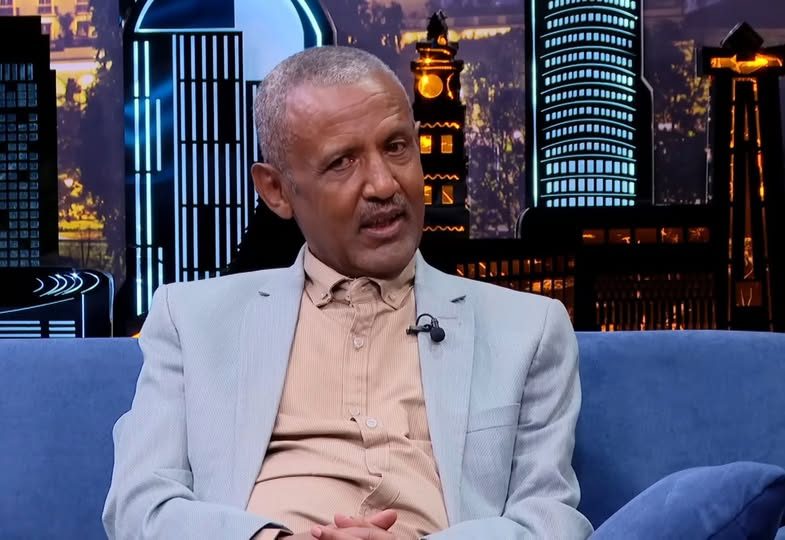
Habtamu is a scholar of political and international studies, with experience as a university lecturer and a history of holding public office. Yet he ultimately chose a path that, in his words, aligned with where his soul led him. He explained that he wanted to give all of himself to his craft, despite the financial hardships that came with that decision.
Close friends later testified that the author had endured significant hardship and had even been admitted three times to Amanuel Mental Health Hospital. They described how he spent many days in isolation and struggled to sell enough copies of his books to meet his basic financial needs. These difficulties were further compounded by copyright-related issues, which meant that much of his work failed to yield financial returns.
Yet Habtamu’s story is not unique. It reflects a lived reality shared by many artists who produce significant cultural works in isolation, often away from public recognition and material security. This incident became a meteorite moment for the artist—though his cultivated pride made him reluctant to fully embrace the significance of public recognition as a form of reprieve. Nevertheless, it opened doors for him, as public curiosity surged in an age defined by social media sensationalism, where stories often gain value only after they shock.