Sudan’s military-led government has lifted a curfew and state of emergency in Khartoum, more than two years after the restrictions were imposed as the capital became a major battleground in the country’s devastating civil war, state media reports.
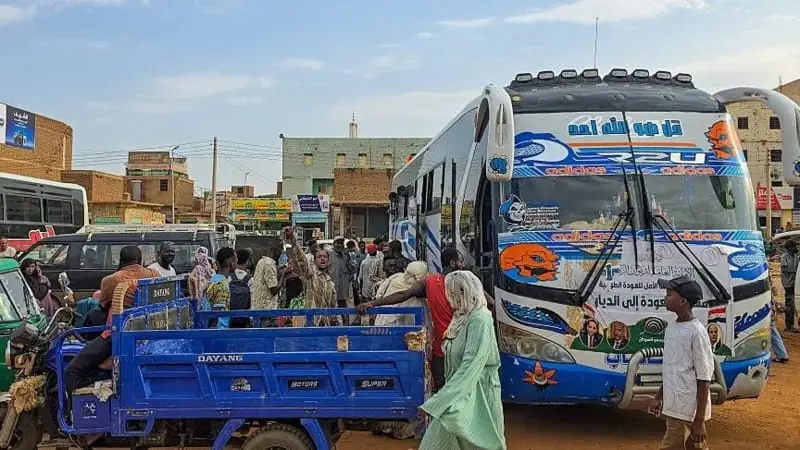
The move comes 18 months after the army recaptured Khartoum from the paramilitary Rapid Support Forces (RSF), which has been fighting the Sudanese Armed Forces (SAF) since war erupted in April 2023. Authorities say lifting the restrictions is aimed at restoring normal life and encouraging residents, businesses and diplomatic missions to return.
More than two million of the roughly five million people who fled Khartoum during the conflict have since returned, according to the International Organization for Migration. But much of the capital remains badly damaged, with looted buildings, unreliable electricity and disrupted livelihoods, while fighting continues in parts of southern and western Sudan.
The government has reopened Khartoum’s main airport for some flights and is encouraging businesses and embassies to resume operations. However, residents continue to face severe power shortages, which officials blame on RSF drone attacks and damage to electricity infrastructure.
The RSF has rejected the allegations as “incorrect and army propaganda”.
Despite lifting the emergency measures, security operations continue across greater Khartoum, with authorities warning residents travelling at night to carry identification.
Army sweeps are also reportedly targeting suspected RSF sleeper cells, undocumented foreigners and criminals.
Meanwhile, concerns are growing that the conflict is spreading beyond Sudan’s borders. Chad has accused the Sudanese army of an air strike that hit a military convoy inside Chadian territory on 20 August, while Sudan denies the allegation and accuses Chad of allowing RSF supplies to pass through its territory.
The United States has condemned the alleged cross-border strikes and warned that the conflict has no military solution. Washington is also pushing for a nationwide arms embargo, including restrictions on attack drones, as international efforts continue to secure a humanitarian truce.