Djibouti is a geographically tiny country located in the Horn of Africa, bordering Eritrea and Ethiopia. Despite its small size, Djibouti has emerged as a strategically powerful state. It is best known for hosting multiple ports through which landlocked Ethiopia channels over 95 percent of its international trade. As a result, Djibouti’s economy is heavily dependent on the service sector. According to the World Bank and the International Monetary Fund (IMF), revenues generated from Ethiopian cargo alone account for roughly 25 percent of Djibouti’s national income.
Although Ethiopia has been searching for alternative ports for its overseas trade, it remains largely dependent on Djibouti’s port facilities. This dependence, however, is reciprocal: arid Djibouti relies heavily on Ethiopia for fresh water, agricultural products, and electricity. This mutual reliance has created a stable economic interdependence between the two countries.
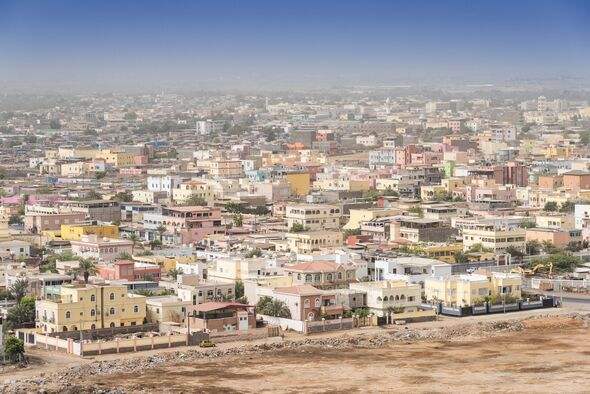
With a population of nearly one million people and a total land area of approximately 23,000 square kilometers, Djibouti has extremely limited natural resources. Only about 0.04 percent of its land is arable. Just as agriculture forms the backbone of Ethiopia’s economy, the service sector particularly port services, logistics, and foreign military leasing, constitutes the mainstay of Djibouti’s economy.
These facts often come to mind when thinking about Djibouti. However, many in Ethiopia including those who claim that Djibouti was historically part of Ethiopia fail to understand how and why this small country has become so powerful. The power Djibouti has accumulated through its strategic geographic location and international alliances is frequently underestimated.
A revealing example is a statement once made by a senior Ethiopian government official, who claimed that Ethiopia had become so powerful that it had no interest in invading even “tiny” Djibouti. Figuratively, the remark implied that Djibouti was weak and could be easily subdued. Such statements reflect a broader misunderstanding, or deliberate neglect of Djibouti’s strategic power buildup.
Nevertheless, at a time when countries in the Horn of Africa such as Ethiopia, Sudan, and South Sudan are beset by internal conflicts, interstate tensions, and political instability, Djibouti stands out as an island of relative peace and stability.
Geostrategic Location and Military Alliances
Djibouti’s geostrategic importance derives from its location near the Bab el-Mandeb Strait, one of the world’s critical maritime chokepoints. The strait, through which approximately one-tenth of global trade passes, links Africa, Europe, and Asia. Any disruption at Bab el-Mandeb could have far-reaching consequences for global trade and security.
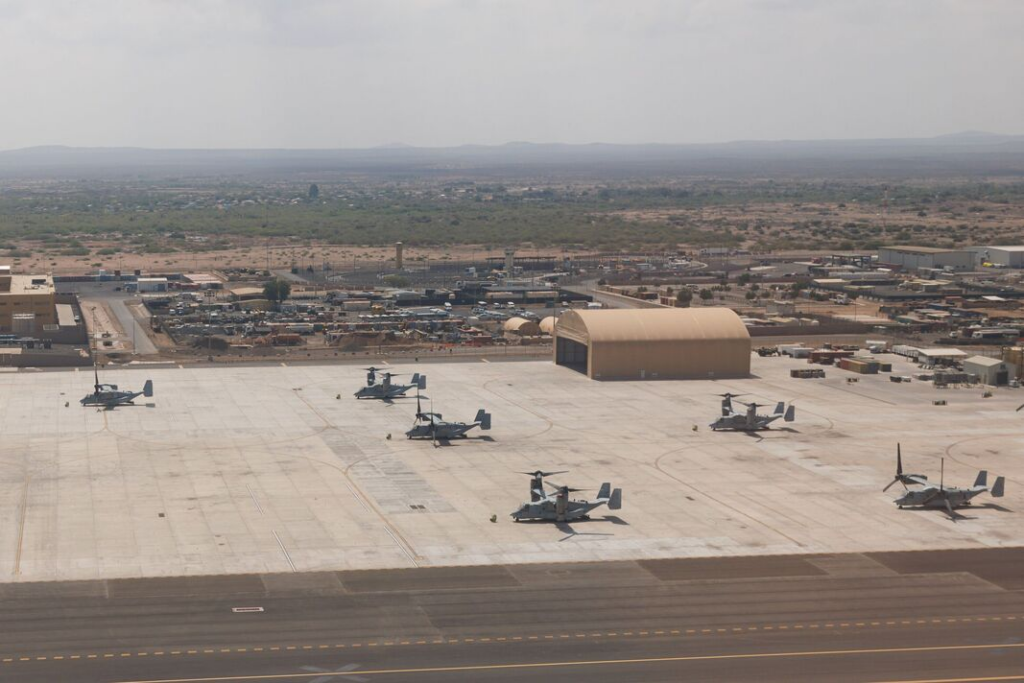
Situated at the western gate of the strait, Djibouti has gained exceptional leverage over one of the world’s busiest maritime routes. The power dividend Djibouti derives from its location is greater than that of many other countries in the Red Sea basin. The country has become a logistics hub and a magnet for foreign military bases. Global powers have vied to establish a presence in Djibouti, with the United States, China, Japan, France, Italy, Germany, and others maintaining military installations.
By hosting military bases of powerful nations, Djibouti secures a form of “iron-clad” protection. This represents a political strategy whereby a small state enhances its security and influence by cultivating powerful allies. Today, although Djibouti is small in every aspect, very few could dare to attack it. In a volatile region where violence and conflicts are commonplace, Djibouti has maintained relative peace.
Djibouti’s Interaction in the Horn of Africa
Djibouti’s relations with Eritrea have historically been tense, primarily due to the boundary dispute over Ras Doumeira Island. Although the two countries have not reached a legal agreement on the border, they resumed diplomatic relations following the 2018 regional rapprochement.
Djibouti maintains cordial relations with Ethiopia and other Horn countries, often manifested in anti-terrorism cooperation and regional security initiatives. As a host of IGAD, Djibouti seeks to portray itself as a mediator, as it has done in the South Sudan and Somalia conflicts, leveraging its political stability and neutrality to facilitate dialogue and peacebuilding.