What China and Africa Can Learn from Each Other’s Development Journeys
By Afro-Insight

China’s transformation is often represented by highways, railways, factories, ports and rapidly expanding cities. Yet the accompanying video, Classics Quoted by Xi Jinping, suggests that development begins with something deeper: a society’s history, values, leadership and confidence in its ability to shape the future.
Drawing on traditional Chinese writings quoted by President Xi Jinping, the programme explores economic development, technological innovation, environmental protection and people’s livelihoods. It shows how ideas inherited from the past can be applied to modern challenges.
For African audiences, the programme offers an opportunity to reflect on China’s development experience. For Chinese readers, it also opens a window onto Africa’s own ambitions, knowledge and search for a development path grounded in African realities.
China–Africa cooperation can connect these two experiences. It can combine China’s infrastructure, manufacturing and technological capabilities with Africa’s young population, natural resources, expanding markets and growing culture of innovation.
Development Is Built Over Generations
China’s industrial transformation was not achieved through one policy, investment or generation of leaders. It involved decades of planning, experimentation, infrastructure construction, education and investment in productive industries.
The lesson for Africa is not to copy China’s system. African countries have different political structures, cultures, economic conditions and development priorities.
The relevant lesson is the importance of continuity.
Development plans cannot succeed when they are abandoned every time a government changes or external funding ends. Roads, railways and ports must be connected to agricultural areas, mines, factories and regional markets. Industrial parks require reliable electricity, trained workers, efficient logistics and access to finance.
China’s experience shows that infrastructure produces its greatest benefits when it is part of a wider industrial strategy.
A Partnership That Has Built Connections
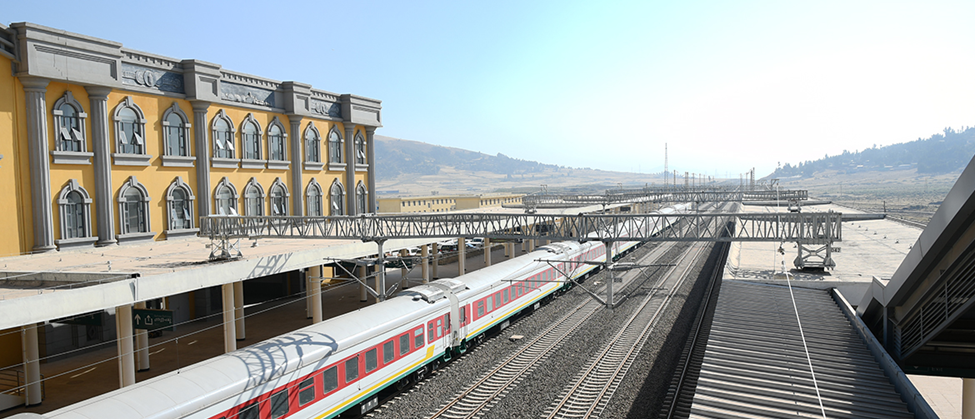
Infrastructure has been one of the most visible areas of China-Africa cooperation.
Chinese companies and financing have supported roads, railways, ports, power facilities, industrial parks and telecommunications networks across the continent. These projects have helped connect cities, reduce travel times and open new economic corridors.
But the next phase of cooperation must go beyond building physical infrastructure.
A railway should not only carry raw materials to a port. It should also connect farms to processing centres, manufacturers to regional markets and workers to new areas of employment.
A power project should not only add generating capacity. It should help local industries produce competitively and allow small businesses to expand.
The planned TAZARA Railway Prosperity Belt, linking Tanzania and Zambia, illustrates this broader ambition. The three countries have connected the railway’s rehabilitation with industrial parks, special economic zones, localized production, agricultural modernization and intra-African trade.
This is the direction Africa-China cooperation should increasingly take: infrastructure as a platform for production and regional integration.

From Raw Materials to African Products
Africa possesses major reserves of minerals, agricultural resources and renewable energy. However, much of this wealth is exported without significant processing.
Cocoa leaves the continent before becoming chocolate. Coffee is exported before much of its commercial value is created. Minerals needed for batteries and clean-energy technologies are often shipped abroad without being refined or manufactured into finished products.
Africa accounted for only about two percent of global manufacturing value added in 2024, according to the United Nations Industrial Development Organization.
China’s industrial experience demonstrates the importance of manufacturing, local supply chains and the gradual movement towards higher-value production.
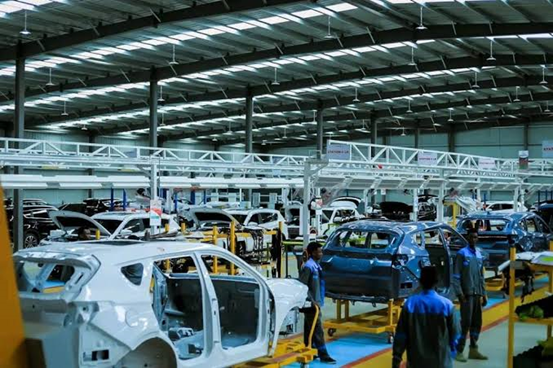
China and Africa can cooperate to build more processing and manufacturing capacity on African soil. Chinese investment can support African companies in producing construction materials, machinery, textiles, pharmaceuticals, processed foods, electric-vehicle components and renewable-energy equipment.
The objective should be more than increasing trade volumes. It should be to increase the African value contained in every product traded.
The Forum on China-Africa Cooperation Beijing Action Plan for 2025–2027 includes commitments to support African manufacturing, industrial parks, small and medium-sized enterprises, local processing of critical minerals and industrial skills. It also calls for Chinese enterprises to recruit and train local workers.
Turning those commitments into measurable projects will be important for both sides.
Connecting Chinese Investment with African Integration
China’s large domestic market helped its manufacturers achieve scale. Most individual African economies cannot offer the same market size, but the continent can create scale through integration.
The African Continental Free Trade Area provides a foundation for building regional production networks.
Instead of every country trying to manufacture every product, African economies can develop complementary roles. One country may supply raw materials, another may process them, while another provides energy, technology, logistics or access to ports.
Chinese investors can support this process by designing projects for African regional markets rather than treating each country as an isolated destination.
The United Nations Economic Commission for Africa says the continental trade agreement can reduce commodity dependence, increase manufacturing and strengthen Africa’s position in global value chains. (Economic Report on Africa 2025)
For China, stronger African regional value chains would create more reliable investment opportunities, diversified supply chains and larger markets. For Africa, they would help retain value, create employment and expand trade among neighbouring countries.
Skills Must Accompany Infrastructure
Factories, railways and power stations cannot drive development without people who can operate, maintain and improve them.
Every major China-Africa project should therefore include practical plans for vocational education, apprenticeships, engineering training, management development and knowledge transfer.
African universities and technical institutions can establish partnerships with Chinese universities, research centres and manufacturers. Training should take place not only in classrooms but also inside factories, construction sites, laboratories and technology companies.
African workers should increasingly move from providing labour to holding technical, managerial and ownership roles.
The true measure of technology transfer is not how much equipment arrives. It is whether local people acquire the ability to maintain it, adapt it and eventually produce their own technologies.
China can share experience in manufacturing, infrastructure and technological development. Africa can contribute knowledge of its markets, communities, environmental conditions and local innovation.
Knowledge should move in both directions.
Building a Green Industrial Future
Africa has an opportunity to industrialize without repeating every polluting stage of earlier industrial revolutions.
The continent possesses enormous solar, wind, hydropower and geothermal potential. It also holds many of the minerals required for batteries and renewable-energy technologies.
China is a major producer of solar panels, batteries, electric vehicles and other green technologies. Cooperation in these sectors could support Africa’s energy access and industrial development.
However, African countries should not remain only suppliers of raw minerals or buyers of finished technology. Cooperation should help establish processing, component manufacturing, maintenance, research and innovation in Africa.
Joint ventures between African and Chinese companies could produce solar equipment, batteries, electric buses and energy-storage systems for African markets.
Such partnerships would connect Africa’s industrial ambitions with the global transition towards cleaner energy.
Culture Can Strengthen Development
One of the most valuable messages from Classics Quoted by Xi Jinping is that modernization does not require societies to abandon their cultural foundations.
China has drawn on its historical traditions while pursuing science, industry and technological advancement. Africa can do the same.
African societies have rich traditions of collective responsibility, trade, craftsmanship, environmental stewardship and community problem-solving. These traditions should not be treated as obstacles to modernization.
They can help shape an African model of development that values innovation while remaining connected to people, culture and place.
Cultural exchange between China and Africa should also be a two-way conversation. Chinese audiences can learn more about Africa’s histories, philosophies, artistic traditions and modern achievements. African audiences can engage with Chinese culture beyond commercial relations and construction projects.
Deeper understanding can give economic cooperation a stronger human foundation.
A Partnership of Shared Progress
The most useful lesson from China is not that one development model can be transferred unchanged to another continent.
It is that transformation becomes possible when long-term planning, infrastructure, skills, production and national confidence work together.
Africa does not lack ambition, resources or ideas. Its central challenge is connecting them through capable institutions, reliable infrastructure, regional markets and sustained implementation.
China can be an important partner in that process. Africa, in turn, offers China expanding markets, investment opportunities, natural resources, young talent and a partnership with a continent that will play an increasingly important role in the global economy.
The next chapter of China-Africa cooperation should therefore be defined not only by what is built, but by what remains: productive industries, skilled workers, stronger African companies, sustainable communities and deeper mutual understanding.
That would transform cooperation from a collection of projects into a shared journey towards prosperity.