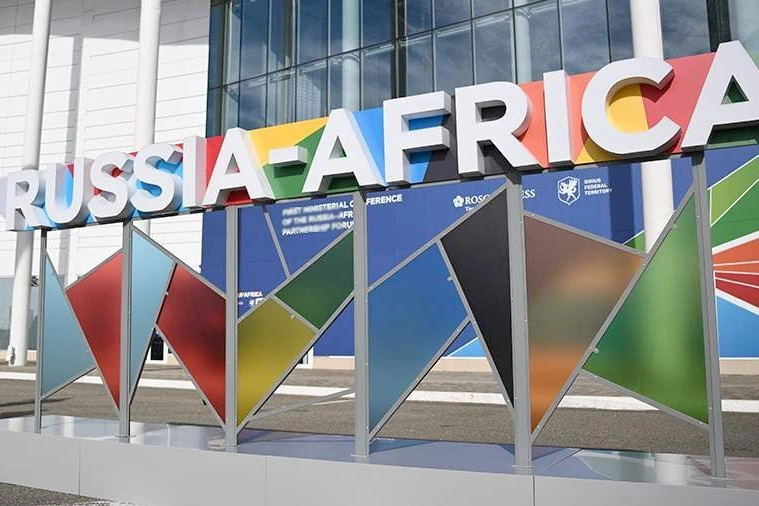
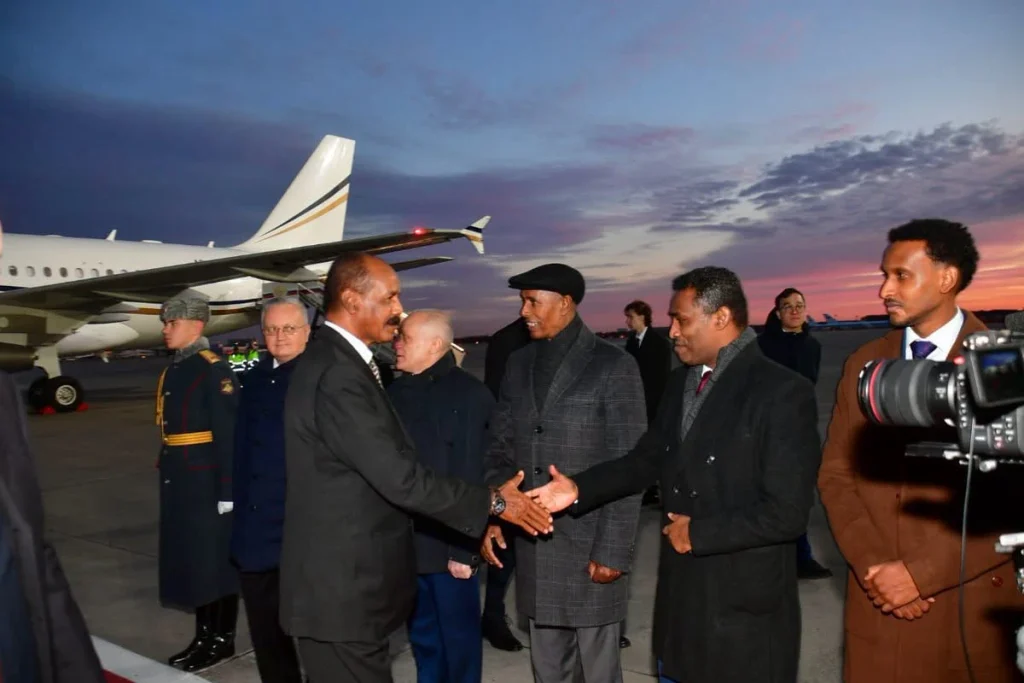
Eritrean President Isaias Afwerki arrived in Moscow on Tuesday to attend the third Russia–Africa Summit, scheduled for October 28–29, amid escalating tensions between Ethiopia and Eritrea and Moscow’s offer to facilitate dialogue between the two neighbours.
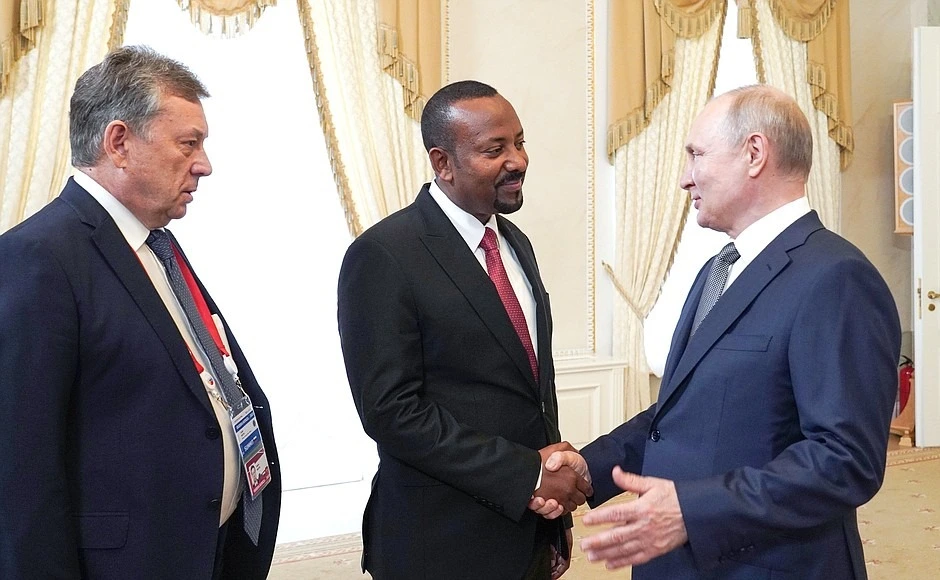
Eritrea’s Information Minister Yemane Gebremeskel announced Afwerki’s arrival but did not indicate whether talks with Ethiopian representatives were planned. He said the Eritrean president would hold discussions with Russian President Vladimir Putin on the sidelines of the summit. Ethiopian Prime Minister Abiy Ahmed is also expected to attend the summit.
Relations between the two countries began to deteriorate following the end of the war in northern Ethiopia and Ethiopia’s pursuit of access to the Red Sea, which Ethiopian officials have described as a matter of survival. However, tensions took an unprecedented turn last month when the two countries moved to sever their diplomatic ties, reversing the rapprochement that began in 2018 after nearly two decades of relations characterized by a state of “no peace, no war.”
In announcing the closure of Ethiopia’s embassy in Asmara and declaring 10 Eritrean diplomats in Addis Ababa persona non grata, Ethiopia’s Ministry of Foreign Affairs accused Eritrea of acting against its national interests by supporting armed groups operating inside the country, including the Tigray People’s Liberation Front (TPLF). The renewed confrontation between the TPLF and the federal government may have contributed to Addis Ababa’s decision to sever diplomatic ties. Eritrea, which has denied the accusations, has in turn accused Ethiopia of threatening its sovereignty through its ambitions for Red Sea access. Asmara also moved to sever diplomatic ties with Addis Ababa.
Given the strategic importance and sensitivity of the Horn of Africa, the United States, the European Union, the African Union and the United Nations have called on both countries to avoid escalation and pursue dialogue.
However, calling for dialogue is one thing; securing negotiations requires diplomatic leverage, pressure and other tools to bring the parties to the table and encourage a negotiated settlement.
Russia has reportedly offered to mediate between the two countries. In October, Sputnik reported that Moscow was willing to provide a platform for contacts between Ethiopian and Eritrean representatives. Given Russia’s economic and political interests in the region, as well as the strategic importance of the Red Sea as one of the world’s vital commercial shipping routes, preventing a conflict would serve its interests. Doing so, however, would require engaging both governments and potentially exerting diplomatic pressure on them, whether equally or in different ways.
Moscow maintains relations with both countries, although the relationships differ in their historical foundations, strategic value and diplomatic priorities. Ethiopia has considerable influence in African politics and joined BRICS, the emerging-economy grouping co-founded by Russia. Eritrea, meanwhile, occupies a strategically important position along the Red Sea coastline.
Moscow would risk compromising its interests if it became too closely aligned with either side at the expense of the other. Preventing an escalation of the dispute could therefore be a calculated diplomatic strategy.
Russia also has economic and military ties with Ethiopia. Most notably, the two countries have advanced cooperation towards developing a civilian nuclear power plant in Ethiopia. Their broader relationship includes defence, trade and technological cooperation. For Eritrea, whose relations with Western countries have long been complicated by sanctions and diplomatic disputes, closer ties with Russia could offer an additional international partner and a means of diversifying its external relationships. Russian naval vessels have also visited Eritrean ports, although the details of any arrangements governing Russian access to port facilities remain unclear.
These existing relationships could give Russia considerable diplomatic leverage, providing it with channels to communicate with both governments and encourage de-escalation.
Whether Moscow can translate that leverage into direct talks at the summit, however, will depend on the willingness of Ethiopia and Eritrea to engage. Russia’s ability to facilitate dialogue may be significant, but securing a negotiated settlement would require both governments to address their underlying security concerns and make compromises.