Ethio Telecom’s Half-Year Momentum: Scaling the “Next Horizon”
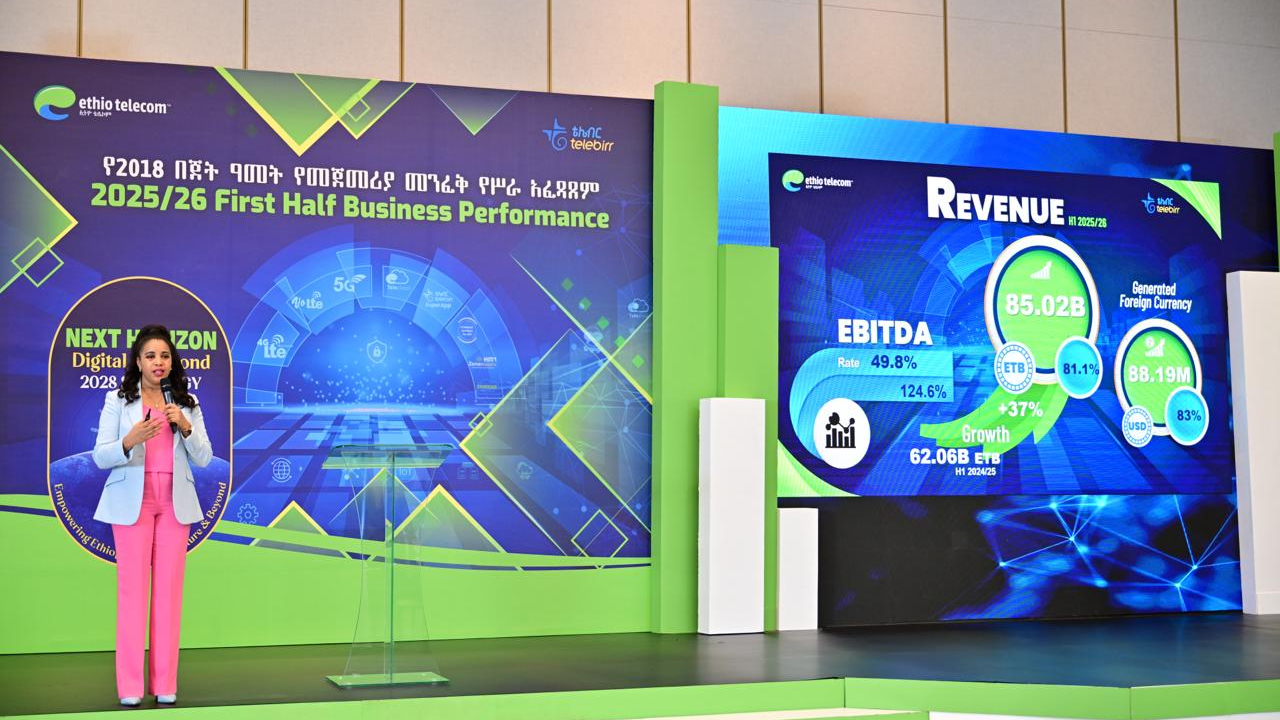
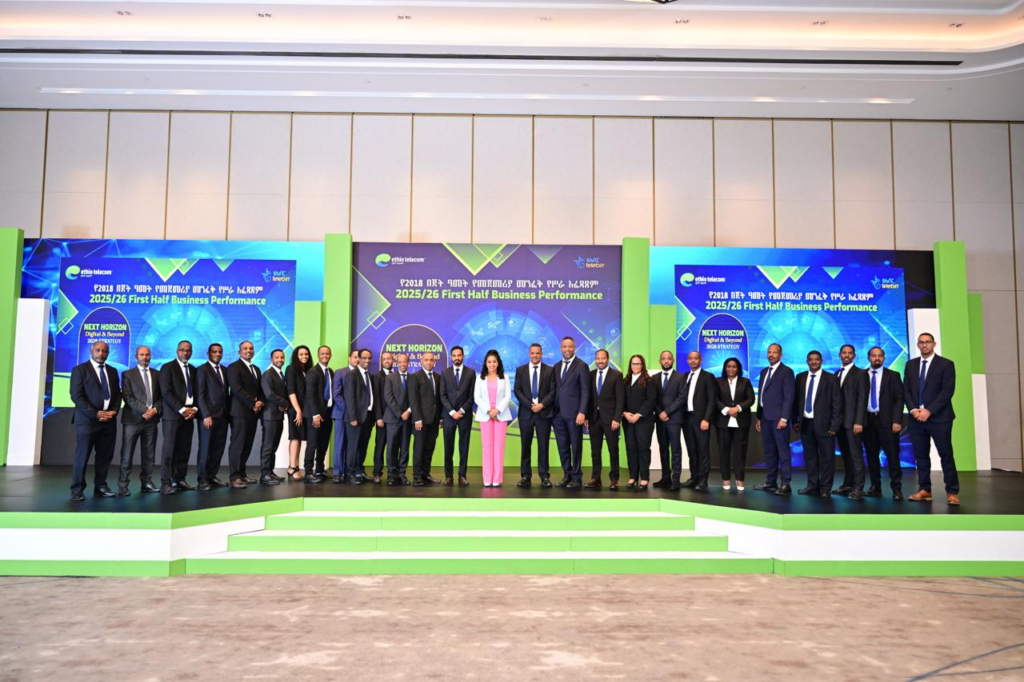
In a comprehensive mid-year performance report released today, January 29, 2026, Ethio Telecom CEO Frehiwot Tamru detailed the company’s aggressive growth trajectory under its new “Next Horizon: Digital & Beyond 2028” strategy. The state-owned giant has successfully expanded its reach and modernized its infrastructure, signaling a significant leap in Ethiopia’s digital transformation journey.
Record-Breaking Revenue and Growth
Ethio Telecom reported an impressive half-year revenue of 85.02 billion birr, representing a 37% increase compared to the same period last year. This growth was achieved through increased service usage and the successful rollout of 81 new products during the reporting period.
Reflecting on the company’s ability to scale despite macroeconomic pressures, Frehiwot Tamru noted:
“Our progress is a result of our focus on technology accessibility and digital inclusion. We have achieved 81% of our ambitious half-year plan, proving that our shift from a traditional telecom to a digital ecosystem enabler is yielding real-world impact.”
Connecting the Cities: Rural Expansion
A major highlight of the report was the company’s commitment to bridging the digital divide. In just six months, Ethio Telecom constructed 278 new mobile stations, with nearly 47% (130 sites) located in remote rural areas. This expansion has brought connectivity to over 761,000 previously unserved citizens across 102 Woredas and 332 Kebeles.
Infrastructure and Capacity Milestones
Ethio Telecom has significantly upgraded its “International Internet Gateway” to accommodate the nation’s soaring data traffic. Key milestones include:
4G LTE Expansion: 4G services were extended to 133 additional towns, bringing the national total to 1,069 cities.
Network Capacity: Total mobile network capacity has reached 108 million subscribers, ensuring the system can handle future growth.
Backbone Fiber: The company deployed 377.7 km of new fiber, bringing the total national backbone fiber length to over 23,026 km.
International Gateway: Capacity was boosted to 3 Tbps, with local caching now handling more than half of the traffic to save foreign currency.
“We are not just building towers; we are building a resilient IP Core network with a capacity of 97 Tbps, designed to support the next generation of AI-driven and cloud-based services.”
Share this article
Subscribe
By pressing the Subscribe button, you confirm that you have read our Privacy Policy.