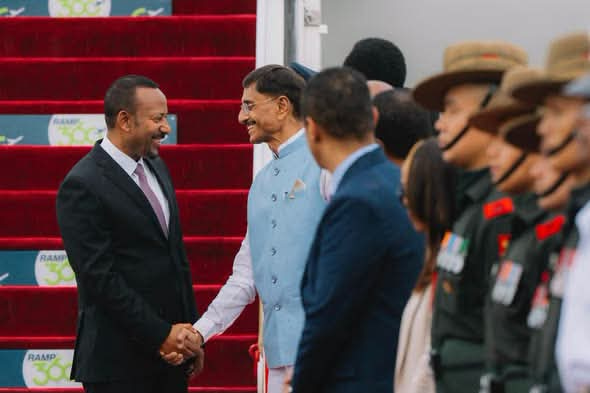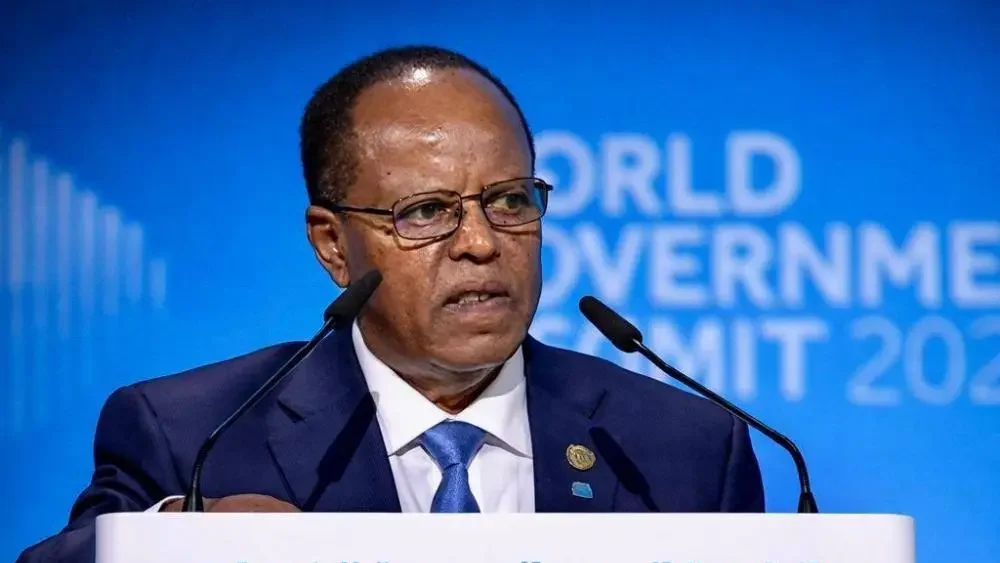
Speaking at the World Government Summit 2026, Ethiopian President Taye Atske Selassie delivered a sweeping address on Africa’s role in a rapidly eroding conventional global order, insisting that Africa is no longer a passive participant in global affairs.
He described the moment as “a defining moment of self-introspection for the Global South, and particularly Africa,” arguing that emerging technologies are enabling African states to bypass traditional development bottlenecks. “Renewable energy, AI, and digital finance are providing tools to leapfrog governmental hurdles,” he said.
The president emphasized agency and ownership: “We don’t see ourselves as mere observers in global change, but architects of our future.”
Continental integration and AfCFTA
President Taye Atske Selassie framed Ethiopia’s economic ambitions not as a standalone project, but as a building block of Africa’s wider vision of connectivity.
A major focus of the address was intra-African trade and economic integration through the African Continental Free Trade Area (AfCFTA). With full implementation, he reiterated, the framework would consolidate a single market of 1.3 billion people with a combined GDP exceeding $3.4 trillion.
AfCFTA, a flagship initiative of the African Union’s Agenda 2063, is designed to drive sustainable and inclusive development by eliminating tariff barriers and strengthening cross-border connectivity. He noted that infrastructure corridors proliferating across the continent are facilitating this integration initiative, describing them as “veins and arteries of regional cooperation.”
Ethiopia’s three strategic priorities
To support both national and continental industrial upgrading, the president outlined three strategic pillars Ethiopia is prioritizing.
First, Energy: Taye said Ethiopia views energy as a regional catalyst, framing Grand Ethiopian Renaissance Dam (GERD) as part of broader vision of Pan-African connectivity.
Second, food self-sufficiency: Ethiopia, he says, once a major wheat importer, has become Africa’s largest wheat producer, achieved through heat-resistant varieties and strategic irrigation. He also highlighted the country’s coffee sector, noting that last year Ethiopia produced 640,000 tons of coffee, supported by the planting of 8.5 billion high-quality coffee seedlings.
Third, air connectivity. He also noted that Ethiopia is constructing a $12.5 billion international airport with capacity for 110 million passengers and 3 million tons of cargo annually, aimed at expanding Africa’s aviation and logistics links.
Financing gaps
Despite strong growth prospects, the president warned of persistent constraints, particularly chronic capital shortages that widen the gap between vision and implementation, especially for large infrastructure projects. To address this, he said Ethiopia has begun empowering financial institutions and strengthening innovative public-private partnerships.
Red Sea question
He also underscored the strategic importance of the Red Sea, calling its security “critical and paramount for Ethiopia,” and urging “an urgent collaborative framework unburdened by parochial geo-economic interests.”
Africa’s global stance
Closing his remarks, the president highlighted two core principles shaping Africa’s relationship with the rest of the world.
The first is trust. He described past relationships as asymmetrical, citing Ethiopia’s experience under the AGOA framework. “We built state-of-the-art manufacturing industries believing in this framework, yet the rug was pulled out from under our feet for completely different and unrelated reasons.”
The second principle, he said, is Africa’s determination to stand “on the right side of history.” “Africa doesn’t have the luxury of making mistakes,” he said, adding that every decision requires “painful introspection.”
Addressing global power rivalries directly, he concluded: “When we are told to choose friends and foes, Africa’s position is clear one should not be pressured or compelled to choose. We may not be an ally in every geopolitical drive, but we can align based on shared and mutual interests.”
Africa’s push for global connectivity, he said, is ultimately about engaging the world as an equal partner.