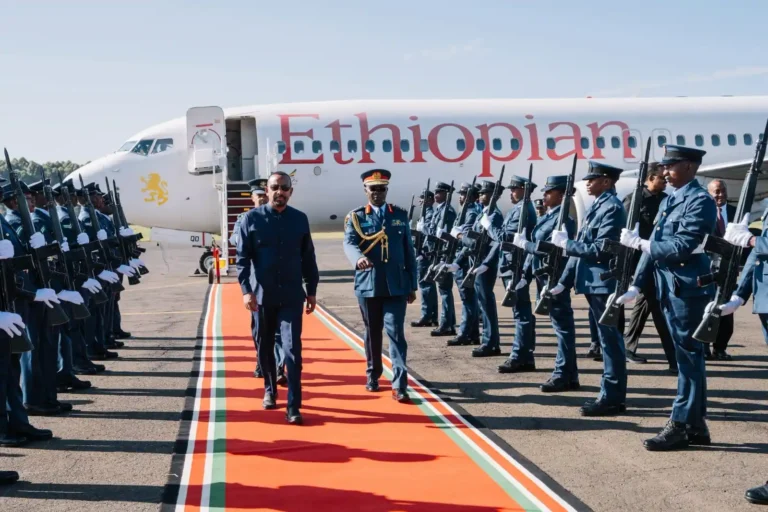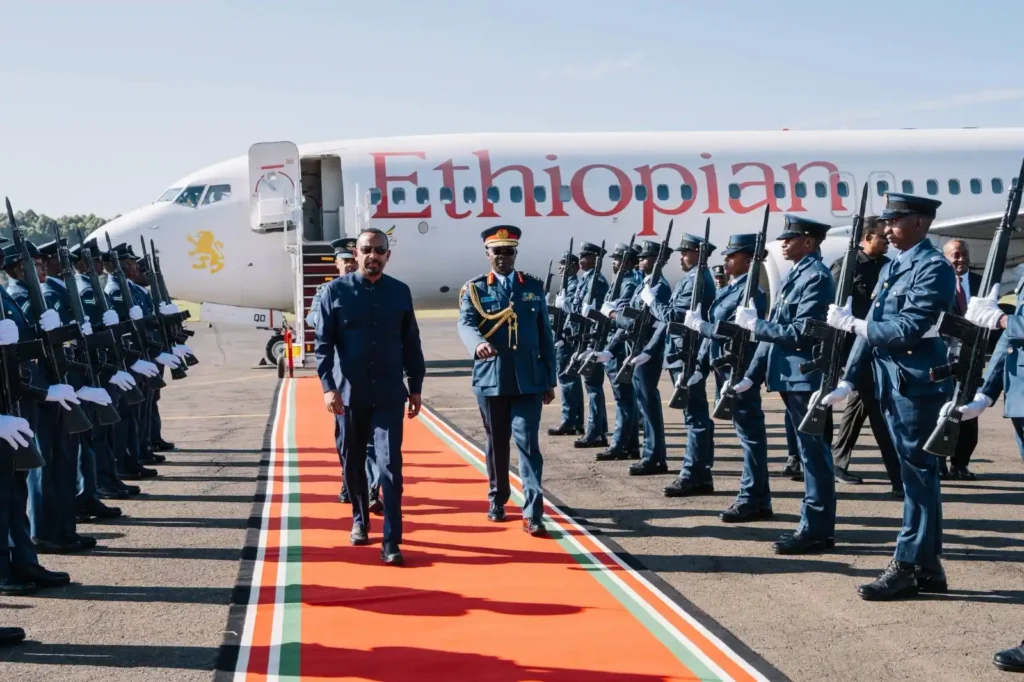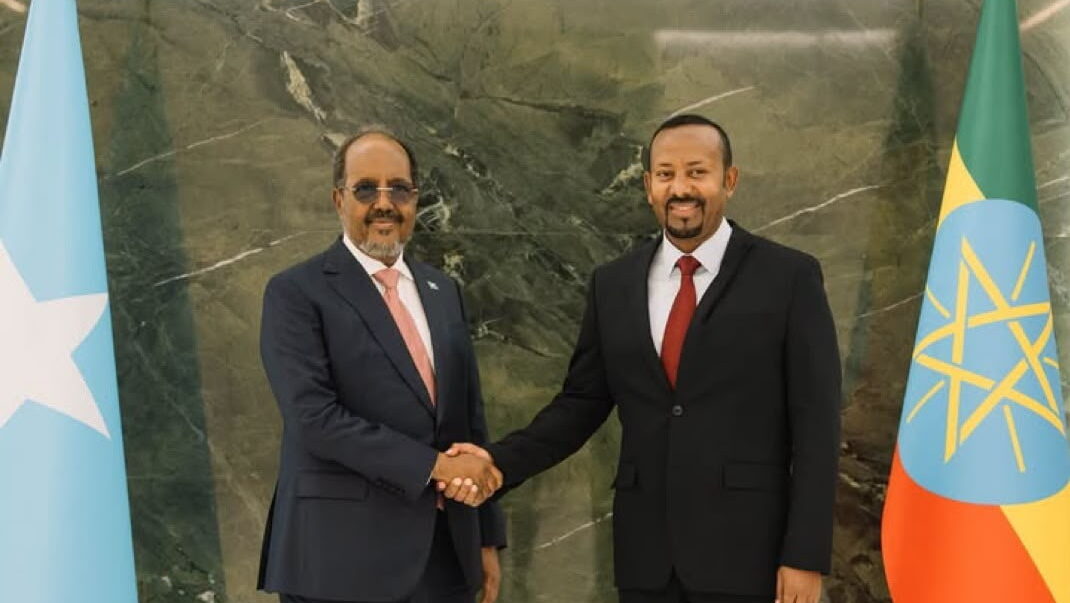
Somalia’s President Hassan Sheikh Mohamud paid an official visit to Ethiopia, where he held talks with Ethiopian Prime Minister Abiy Ahmed.
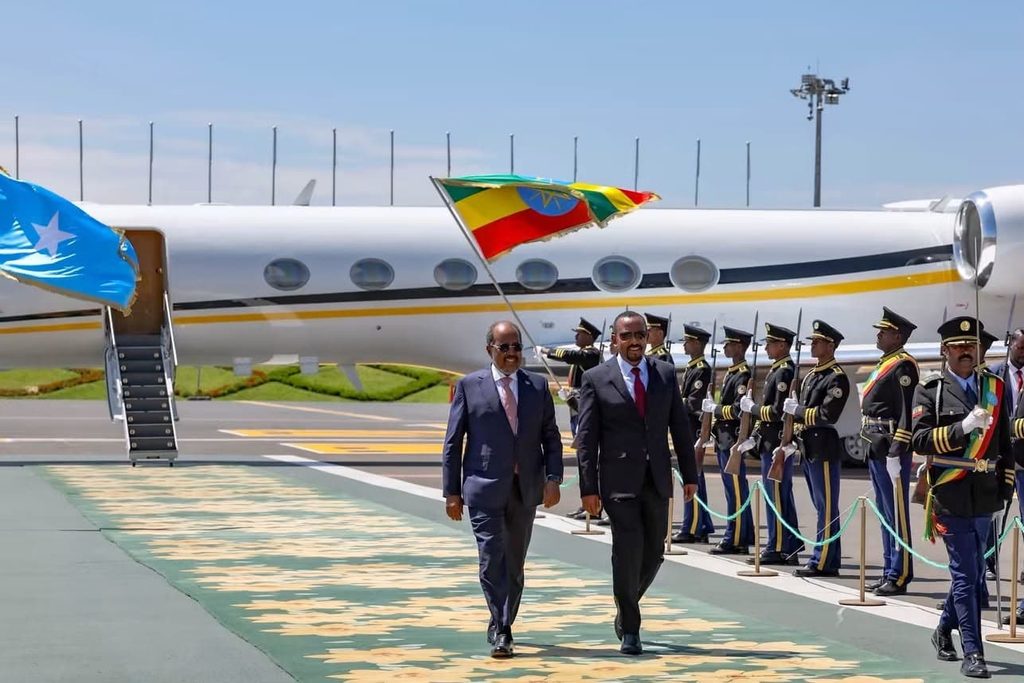
In a Facebook post, the Office of the Prime Minister of Ethiopia said Prime Minister Abiy welcomed President Mohamud at Bole International Airport this morning, without providing further details about the visit.
The visit is significant because relations between the two countries have experienced a serious diplomatic fallout in recent years. In January 2024, Ethiopia signed a memorandum of understanding with Somaliland concerning access to the Red Sea. The agreement was widely understood as involving a long-term lease of coastal land for commercial and military purposes and was linked to Ethiopia’s stated intention to consider recognizing Somaliland.
The move was met with fury in Somalia, which considers Somaliland part of its territory, while it was welcomed in Somaliland. The dispute escalated further that year when Somalia expelled Ethiopia’s ambassador. Ethiopia maintained that its actions were consistent with international law but refrained from taking a reciprocal measure.
Following the diplomatic fallout, intensive mediation efforts, most notably by Turkish President Recep Tayyip Erdoğan who helped ease tensions. In the Ankara Declaration, Ethiopia and Somalia reaffirmed respect for Somalia’s sovereignty, territorial integrity and unity, while agreeing to work toward arrangements that would provide Ethiopia with reliable and mutually beneficial access to the sea.
President Mohamud’s visit to Addis Ababa can therefore be viewed as part of the continuing effort to mend the diplomatic rift and rebuild relations between the two neighbouring countries.
For Ethiopia, the rapprochement comes against the backdrop of renewed tensions in the north and total collapse of the 2022 Pretoria peace agreement that ended the two-year war in Tigray. The visit also coincided with Ethiopia’s accusations that neighbouring Sudan and Eritrea were financing armed groups in the country. However, both countries have repeatedly denied the allegations. For Somalia, closer cooperation with Ethiopia is significant because of the continuing threat posed by Al-Shabaab. Ethiopia has extensive experience and military involvement in operations against the group, making security cooperation between the two countries particularly important for Mogadishu.
The improvement in Ethiopia–Somalia relations could also provide some respite for the wider Horn of Africa, a region facing multiple and interconnected conflicts, including instability in Ethiopia, Sudan and South Sudan. Avoiding further escalation and pursuing diplomatic solutions are therefore important not only from a political and security perspective but also for the region’s economic future. A more stable Horn of Africa would also have wider international implications. The region borders the Bab el-Mandeb Strait, one of the world’s most important maritime chokepoints, through which a significant share of global trade passes.
In this context, President Mohamud’s visit to Addis Ababa is more than a routine diplomatic engagement. It represents another step in the effort to rebuild trust between Ethiopia and Somalia at a time when stability and cooperation in the Horn of Africa have become increasingly important.