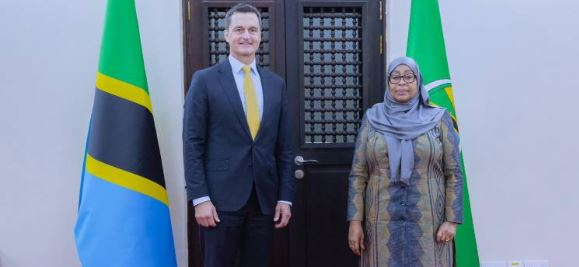
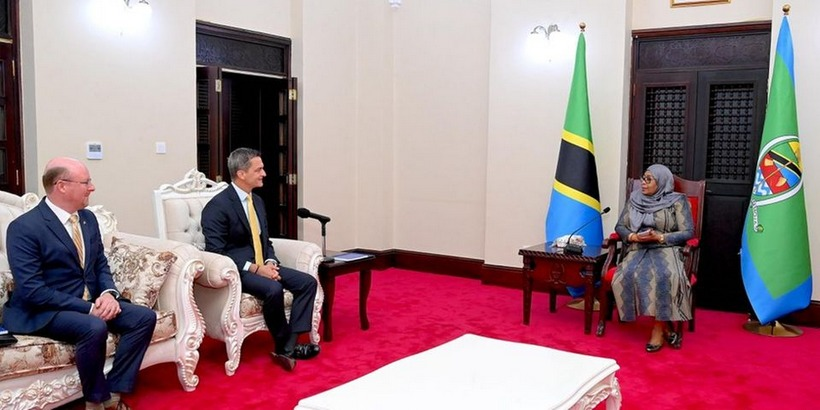
The United States and Tanzania are moving closer to finalizing three major minerals deals with agreements following high-level talks between President Samia Suluhu Hassan and Acting U.S. Ambassador Andrew Lentz. The negotiations mark one of the most significant economic engagements between the two nations in recent years.
This progress comes despite a recent U.S. State Department statement warning that ongoing rights violations in Tanzania “raise grave concerns about the direction of the bilateral relationship and the reliability of the Tanzanian government as a partner.” This agreement comes after a U.S.-brokered peace deal in the Great lakes region, a deal that cleared the way for the United States to get access to critical Congolese minerals.
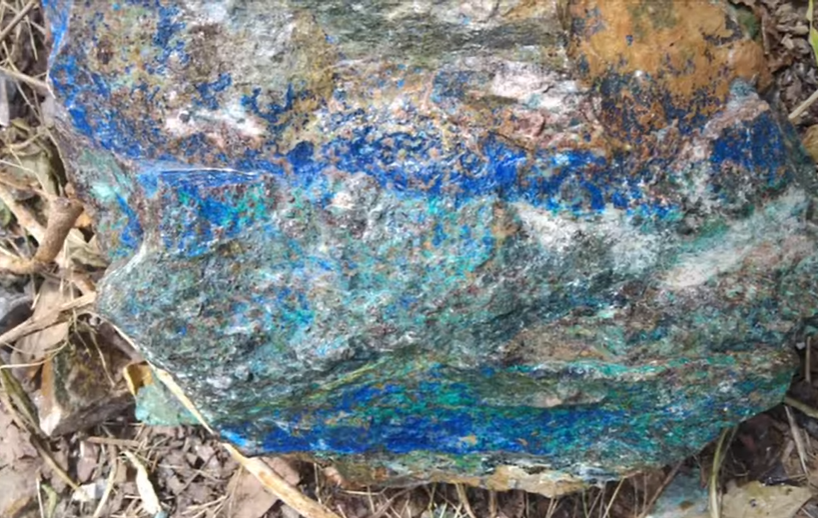
Negotiations in Tanzania are progressing on the $42 billion Liquefied Natural Gas (LNG) project, the $942 million Tembo Nickel investment, and the $300 million Mahenge Graphite development, each positioned as a cornerstone initiative in Tanzania’s long-term industrialization strategy.
President Samia has sought to rebuild international confidence and attract foreign investment after years of strained relations with western partners under former president John Magufuli administration.
Yet, the political backdrop remains complex. Tanzania’s 2025 general election sparked international criticism, with various observers raising concerns about repression on political opponents and deterioration of civil liberties.
Shift From Aid to Trade
The U.S. presents its new partnership model as being grounded in a private-sector–driven, economically centered approach rather than traditional aid dependency. However, analysts argue that this shift, while framed as a departure from previous U.S. outreach to Africa, is largely motivated by intensifying global economic competition and the growing demand for energy and mineral resources to support technological rivalry. From an African perspective, the model appears to eliminate aid while continuing to pursue geopolitical objectives along the familiar playbook of leveraging resources for diplomatic influence.