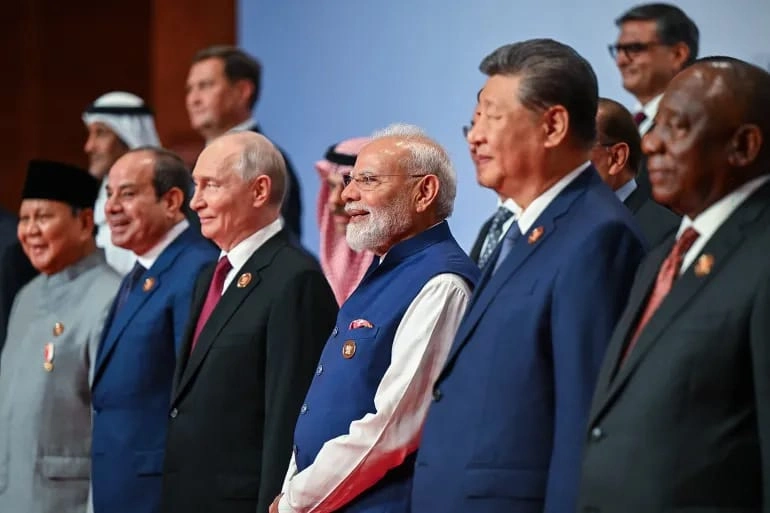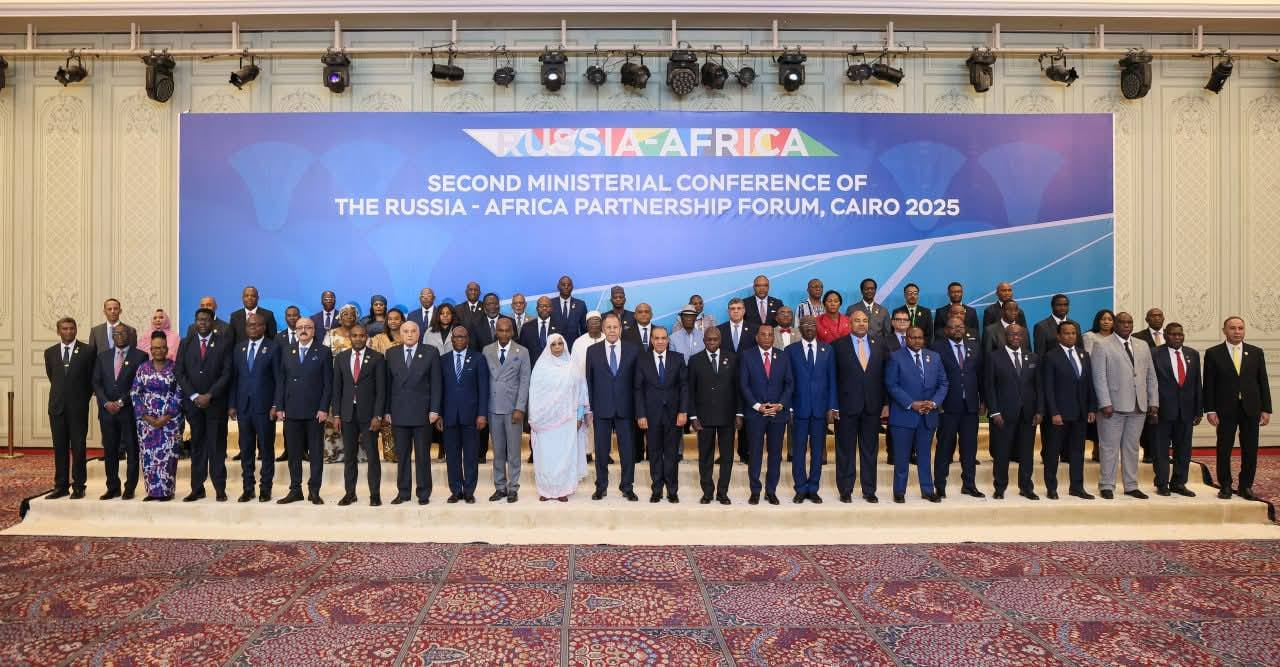
The Second Ministerial Conference of the Russia-Africa Partnership Forum was held in Cairo, Egypt, from 19 to 20 December 2025 and concluded on 20 December with the adoption of a joint statement reaffirming cooperation and outlining the roadmap toward the third Russia-Africa Summit, expected to take place in 2026.
The first Russia-Africa Summit was held in Sochi, Russia, in 2019, followed by the second in Saint Petersburg in 2023. Ahead of the third summit, representatives from more than Russia and 50 African countries, including representatives of regional and multilateral institutions, met with Russia’s Foreign Minister Sergey Lavrov in Cairo for the two-day ministerial conference.
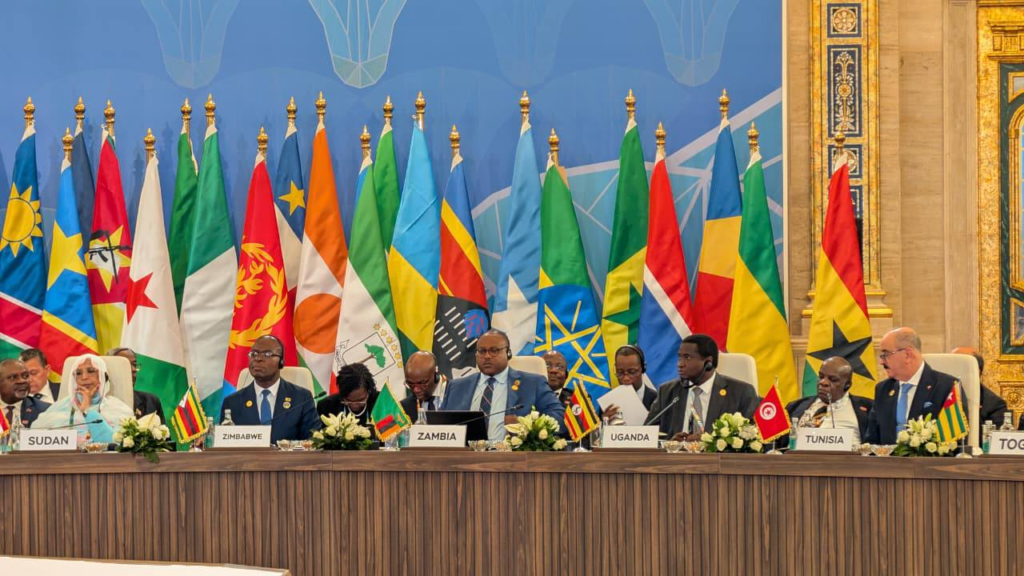
Discussions covered a wide range of political, economic, and security issues, with a particular focus on implementing the action plan adopted at the 2023 Russia-Africa Summit and identifying new areas for future collaboration.
This gathering marked the first Russia-Africa joint ministerial meeting held on African soil.
Speaking at the conference, Lavrov highlighted the expanding economic ties between Russia and Africa, noting that Russia-Africa trade reached USD 28 billion in 2024, representing a 13 percent increase compared to the previous year. However, he stressed that this figure “is not the limit” and emphasized the significant untapped potential for further growth in trade, investment, and industrial cooperation between the two sides.
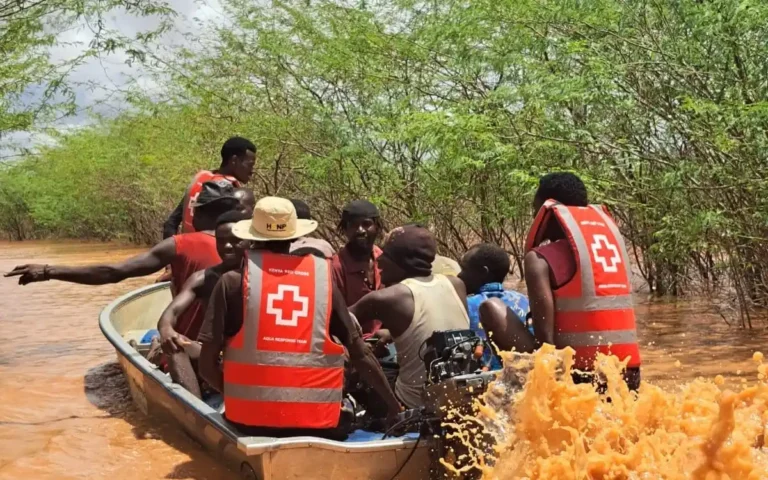
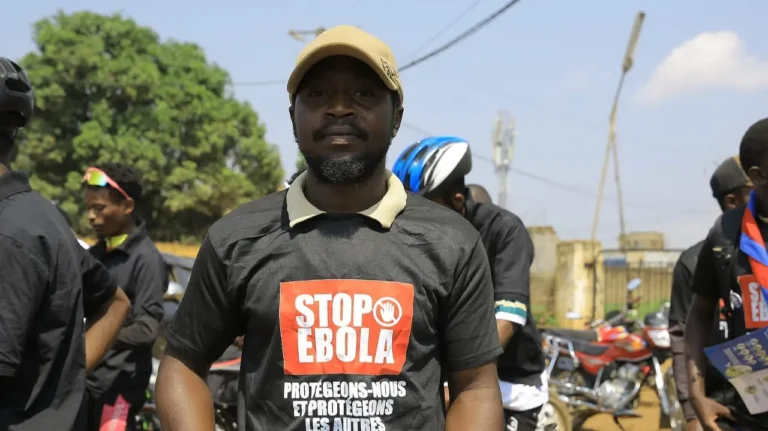
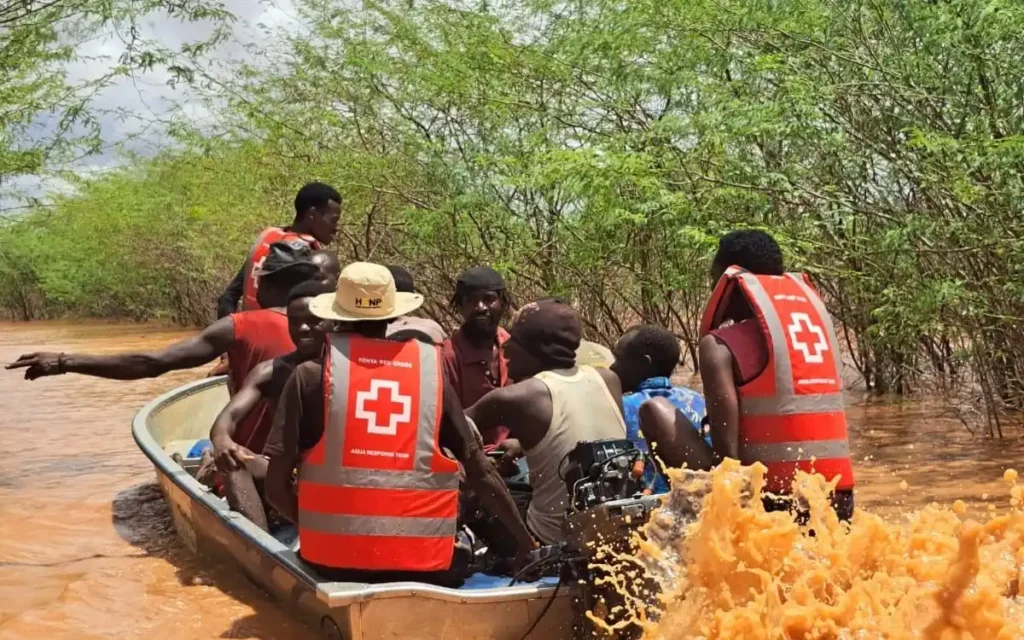
Lavrov also outlined key areas of humanitarian assistance provided by Russia to African countries. He noted Russia’s support in strengthening food security, delivering humanitarian aid during natural disasters, assisting in pandemic response, and contributing to security and stability efforts, including counterterrorism cooperation.
Egypt, which had recently hosted U.S.-led peace talks involving President Donald Trump, invited Russia’s foreign minister and African delegations just weeks later. Lavrov praised Egypt for maintaining a non-aligned and balanced position amid global power rivalries, emphasizing that Russia does not demand exclusive alignment from its partners and respects their freedom to engage with multiple international actors.
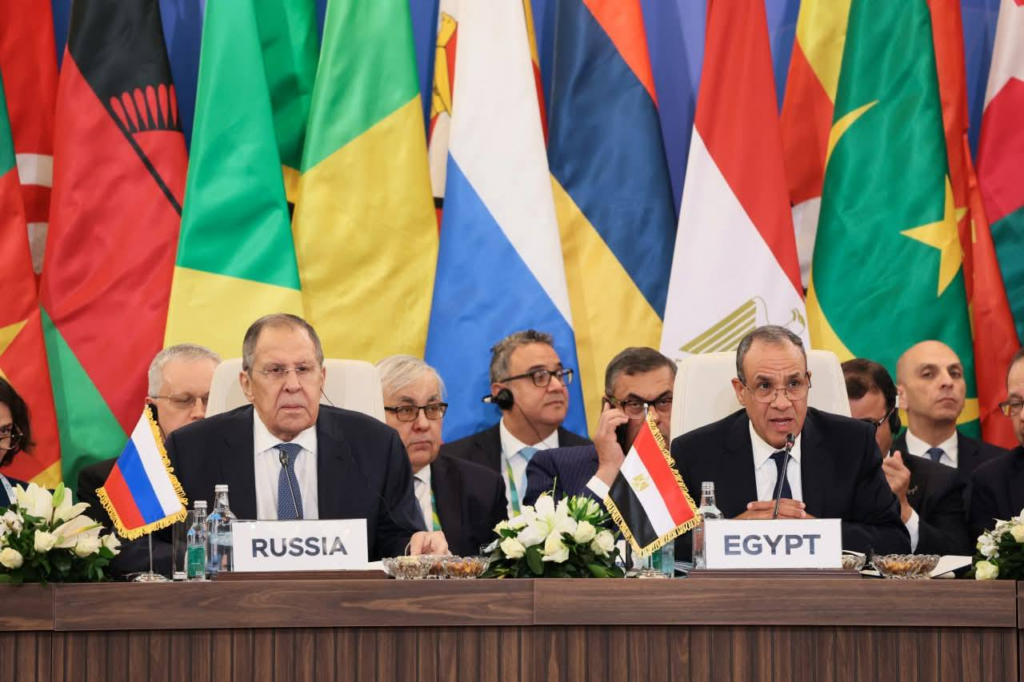
Egypt’s Foreign Minister, Badr Abdel-Aty, brought regional security concerns to the forefront of the plenary sessions, particularly issues related to the Nile River and the Red Sea. He reiterated Egypt’s rejection of unilateral actions while affirming the country’s commitment to strengthening cooperation with Nile Basin states.
The forum concluded with a reaffirmation of key principles on political and diplomatic cooperation, including equitable partnerships, mutual respect for sovereignty, commitment to multilateralism and international law, and support for a multipolar world order. Participants also emphasized the need for comprehensive reform of the United Nations to enhance Africa’s role in global decision-making and called for the “eradication of all forms of colonialism and neo-colonial practices.”
On security cooperation, the joint statement stressed the importance of combating terrorism. Reaffiring support for African-led solutions to African challenges, the two sides called for institutional strengthening to enhance the African Union’s security architecture. The countries also strongly condemned the imposition of unilateral sanctions. They also expressed support for reconstruction efforts in conflict-affected regions.
Regarding economic cooperation the statement highlighted the importance of expanding trade, investment, and industrial collaboration, particularly in infrastructure, energy, agriculture, transport, and digital transformation, reflecting shared priorities for sustainable development across the Russia-Africa partnership.
Overall, Russia–Africa relations increasingly call for the institutionalized reassessment of entrenched systems, positioning the partnership as a platform for alternative engagement grounded in non-interference in domestic affairs and a commitment to multipolarity.