From a landmark health complex in Ethiopia to emergency efforts against Ebola in Central Africa, China and Africa are deepening cooperation as the continent confronts a growing range of public-health threats.
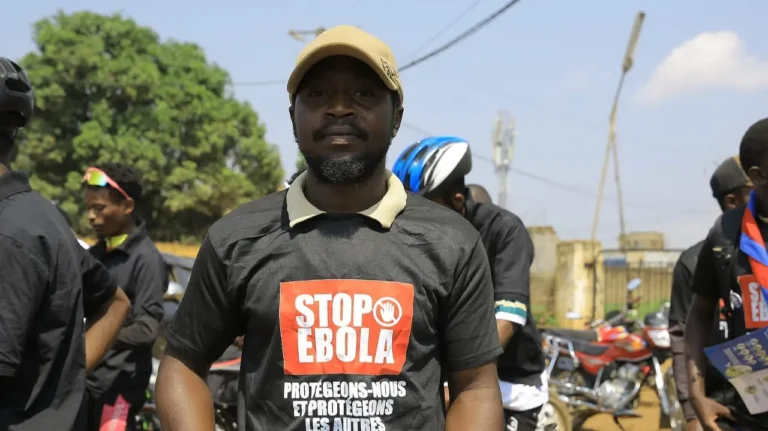
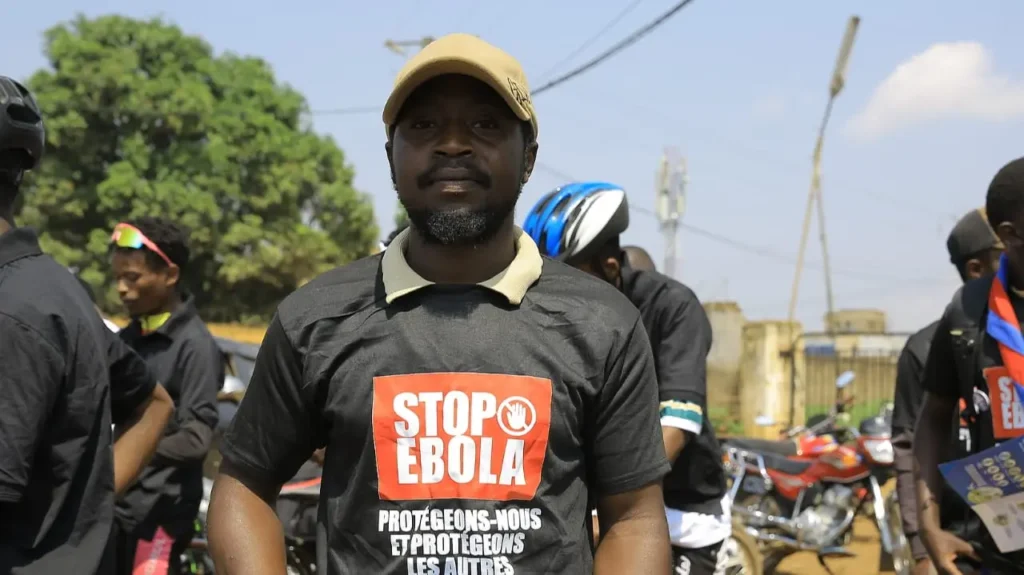
The partnership is taking on renewed importance as the Democratic Republic of Congo battles its largest Ebola outbreak on record.
As of August 31, Congolese Director from Ministery of Health Dr Bruno Bindayinze told to Afro-insight that more than 6,000 confirmed infections and 2,900 deaths from the outbreak, which is being driven by the Bundibugyo strain of Ebola. The outbreak has spread across multiple provinces, putting pressure on already fragile health systems and raising concerns about regional transmission.

DIRECTOR, NATIONAL NUTRITION PROGRAMME, DRC
For Africa’s public-health institutions, the crisis is another reminder that the continent needs stronger disease surveillance, laboratories, emergency-response systems and a health workforce capable of responding rapidly to emerging threats.
And that is where Africa’s growing partnership with China is becoming increasingly important.

From Infrastructure to Health Security
In Addis Ababa, the headquarters of the Africa Centres for Disease Control and Prevention stands as one of the most visible symbols of China’s support for Africa’s public-health infrastructure.
The facility has become a hub for continental disease surveillance, emergency preparedness and coordination.
But cooperation has increasingly moved beyond buildings and equipment.
Africa CDC and Chinese health institutions have been working together on areas including disease surveillance, laboratory capacity, diagnostics, training and outbreak response.
The objective is increasingly about strengthening Africa’s own ability to detect and respond to disease threats before they become continent-wide emergencies.
A Partnership Tested by Ebola
The current Ebola outbreak in DRC is putting that cooperation into a real-world test.
In July, China provided emergency humanitarian assistance to support Africa’s collective response to the outbreak. Chinese Ambassador to the African Union Jiang Feng and Africa CDC Director General Dr. Jean Kaseya signed the handover certificate for the assistance.

Kaseya said the Chinese support was important to the continent’s response and expressed Africa CDC’s willingness to further strengthen technical cooperation with China. (China Foreign Affairs)
The Ebola crisis also highlights why preparedness matters.
The Bundibugyo strain responsible for the current outbreak is particularly challenging because there is no approved vaccine specifically targeting the strain. Health authorities are therefore relying on a combination of surveillance, isolation, contact tracing, infection prevention, community engagement and other emergency measures while research continues. (WHO)
For Africa CDC, the challenge is not only responding to the current outbreak but strengthening systems that can respond to the next one.
Beyond Ebola
Ebola is only one part of a much broader health agenda.
Across Africa, governments and health institutions are dealing with malaria, HIV, tuberculosis, antimicrobial resistance and other infectious diseases, while also preparing for emerging pathogens and future pandemics.
That makes cooperation in laboratories, disease surveillance, scientific research and health-worker training increasingly important.
For China, cooperation with African health institutions has also become part of a broader effort to strengthen public-health collaboration.
For Africa, however, the central question is increasingly one of capacity and ownership: how can international partnerships help African institutions develop the ability to produce, test and deploy their own solutions?
Building African capacity
That question is particularly relevant at Africa CDC’s headquarters in Addis Ababa.
Inside laboratories and public-health institutions across the continent, African scientists are increasingly working on disease detection, genomic surveillance, diagnostics and outbreak preparedness.
The long-term goal is not simply to have partners respond when an epidemic begins.
It is to build systems capable of detecting a threat early, identifying the pathogen, sharing information rapidly and coordinating a response across borders.
The current Ebola outbreak demonstrates how important that capability has become.
The crisis is unfolding in a region affected by insecurity, population displacement and difficult access to healthcare conditions that can make containing an infectious disease considerably more difficult. (AP News)
A partnership for the next pandemic?
China-Africa health cooperation therefore faces a broader test than the response to one outbreak.
The real measure may be whether cooperation can help Africa build sustainable health-security capacity — from laboratories and surveillance systems to research, training and emergency response.
For Africa CDC, whose mandate includes strengthening disease surveillance, emergency preparedness and response across the continent, partnerships are an important part of that effort. (African Union)
As the Ebola crisis continues in DRC, the message from Addis Ababa is increasingly clear: fighting the next epidemic will require more than emergency assistance after a disease emerges.
It will require stronger African institutions, scientific capacity and partnerships that can help the continent prepare before the next health emergency arrives.